Aruba Travel Safety: Scams, Red Flags, and What to Avoid
Aruba Travel Safety: Scams, Red Flags, and What to Avoid at Guadirikiri Cave
Aruba is generally straightforward for visitors, but sensible habits matter, particularly when you leave the resort belt for Arikok National Park and Guadirikiri Cave. The island’s dry heat, unfamiliar roads, rugged tracks and busy tourism economy create a different set of practical risks from those you might encounter at a hotel pool. Keep valuables out of parked cars, read the small print on rental-car insurance, book excursions through identifiable operators, and treat warnings around the coast and park seriously.
Urgent help: Aruba’s official visitor information lists 911 for fire and ambulance and 100 for police. The Dr. Horacio Oduber Hospital can be reached at +297 527 4000. For an immediate threat to life or serious injury, contact the appropriate emergency service rather than trying to solve the situation yourself.
For routine travel problems, give yourself a little more time. A damaged rental car, missing phone or disagreement over a tour price is frustrating, but it is a different category of problem from an accident, serious heat illness or someone being in immediate danger. Save booking confirmations, receipts, rental paperwork and important telephone numbers somewhere you can reach them without relying on the phone that may have gone missing.
Everyday precautions
- Keep passports, spare cards and excess cash secured at your accommodation.
- Lock the rental car and leave nothing valuable visible.
- Check rental insurance, deposits, fuel terms and damage before driving away.
- Carry water when visiting Arikok’s exposed landscapes.
- Use marked routes and obey park closure notices.
- Confirm tour prices and inclusions before paying.
When to get urgent help
- Call 911 for fire or ambulance emergencies.
- Call 100 for police assistance.
- Seek prompt medical help for serious injury or suspected heat illness.
- After a collision, follow the rental company’s accident procedure and contact the relevant authorities.
- If a vehicle is broken into, document the scene and retain police or incident documentation.
- Do not enter a closed cave, restricted trail or dangerous coastal area to retrieve a photograph.
Rental-car scams and insurance traps
A rental car is useful for Guadirikiri Cave because Arikok’s natural attractions sit well beyond the main hotel areas, yet the price on a booking page is only the beginning of the conversation. Aruba’s official tourism guidance notes that deposits are common, with a typical deposit or credit-card pre-authorisation around US$500, while insurance and optional extras can alter the final amount. Requirements also vary by company, so read the actual rental agreement rather than relying on a headline rate.
Before accepting the keys, check the collision-damage terms, deductible, deposit, fuel policy, mileage restrictions, roadside assistance and rules covering dirt or rough roads. Walk around the vehicle with the staff member and photograph existing scratches, dents, wheels, windscreen and interior. Include the fuel gauge and odometer in your pictures. It takes two minutes and can save a tedious conversation later.
- Ask exactly what insurance is included and what remains your responsibility.
- Confirm whether your own travel or credit-card insurance actually covers this rental in Aruba.
- Record pre-existing damage before leaving the lot.
- Check whether driving on unpaved or rough roads is permitted under your agreement.
- Confirm the fuel-return requirement in writing.
- Keep the rental company’s emergency number in your phone and somewhere offline.
Aruba’s roads are generally easy to use, but the rules may differ from home. Traffic drives on the right, roundabout traffic has priority, and roads can become slippery after rain. A normal rental car is a poor choice for rougher terrain that your agreement excludes.
The Government of Aruba requires public transportation businesses to hold the appropriate transportation licence, including taxis, tour buses and rental motor vehicles. The official Transportation License page is worth bookmarking if you want to understand the licensing framework rather than taking a seller’s word for it.
Vehicle break-ins and parking safety
A parked car should be treated as transport, not a temporary luggage cupboard. Aruba’s own visitor code tells guests to lock vehicles and leave valuables behind, and that advice matters around beaches, trailheads and quieter natural attractions where a car can sit unattended while you walk.
- Take passports, wallets, cameras and laptops with you whenever practical.
- Do not leave shopping bags or clothing that could suggest valuables are underneath.
- Lock every door and close windows before walking away.
- Park in designated areas rather than on dunes, beaches or restricted ground.
- At night, choose a legitimate, well-used parking area rather than an isolated roadside.
- Keep a note of the rental company, vehicle registration and insurance details.
If someone breaks into the vehicle, do not turn the scene into a rummaging expedition. Photograph the damage, contact the police where appropriate, notify the rental company and keep every incident number or receipt. If a passport has disappeared, contact your country’s consular service as well as the police.
Fake tour sellers and unofficial cave excursions
Tour sellers deserve the same basic scrutiny as car-rental companies. A polished Instagram page is not proof of a legitimate business, and a very cheap Guadirikiri Cave excursion can become less cheap when transfers, park admission, equipment or other extras appear at the last minute.
- The seller cannot give you a clear business or operator name.
- There is pressure to pay immediately through an unfamiliar payment method.
- The price is dramatically lower than comparable excursions without a clear reason.
- Cancellation conditions are vague or missing.
- The meeting point keeps changing or is described only as “near the cave.”
- The seller cannot explain what the price includes.
- There is no usable telephone number, booking confirmation or written receipt.
For Guadirikiri Cave tickets and tours, use an established booking platform or an official park channel, then check the name of the actual operator, meeting point, inclusions and cancellation terms. Third-party platforms can be useful because the booking record is clear, while official channels may suit travellers who prefer to arrange things directly. The important bit is being able to identify who is responsible for taking you there.
Aruba’s government licensing rules are another useful check: public transportation businesses, including tour buses and rental vehicles, require transportation licensing. A licence requirement does not turn every licensed business into the right choice for every traveller, but an operator who cannot answer basic questions about its business identity deserves extra scrutiny.
Guadirikiri Cave: practical cave safety
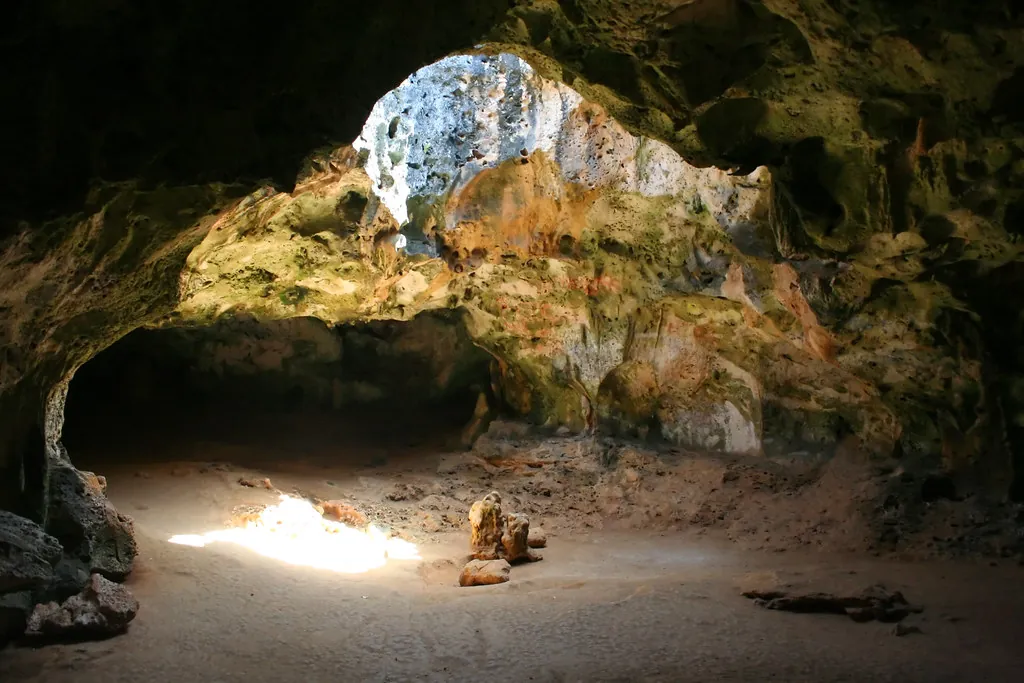
Guadirikiri Cave has the sort of entrance that makes people reach for a camera before they remember their feet. Limestone is uneven, light levels change quickly, and the approach can feel very different from the polished paths around a resort. Wear proper closed-toe footwear with a sole you trust, carry water, and bring a small light even if your phone has a torch.
- Use a torch or phone light in genuinely dark sections.
- Watch your footing where limestone becomes uneven or damp.
- Stay on marked routes and follow ranger or guide instructions.
- Keep noise down around bats and other wildlife.
- Avoid flash photography around bats.
- Do not touch cave formations.
- Do not enter closed areas or restricted cave pools.
- Take rubbish back out with you.
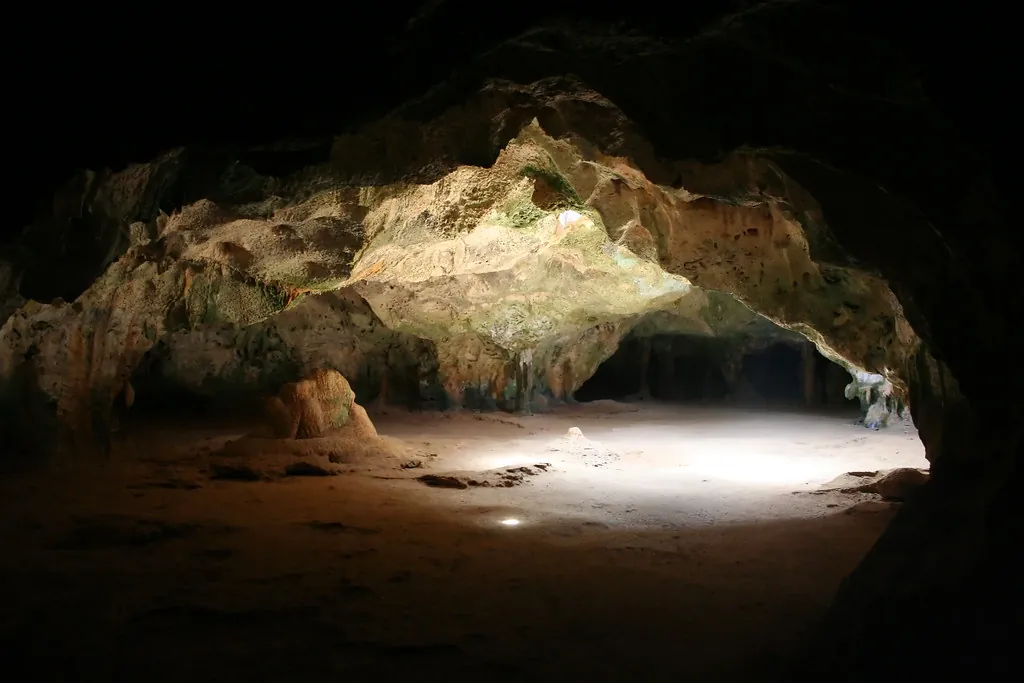
The famous shafts of daylight are part of what makes Guadirikiri so photogenic, while darker chambers give the cave its other personality. A low-light photograph often looks better when you hold the phone steady, lower the exposure slightly and let the brightest patch of rock remain bright rather than trying to illuminate everything.
For the fuller set of cave-etiquette guidance, including wildlife behaviour, closures and photography, use the Visitor Rules & Guidelines. For access, parking and the final approach, see How to Get to Guadirikiri Cave.
Heat, dehydration, and sun exposure
Aruba’s dry climate can make the heat feel deceptively manageable, particularly when trade winds are moving across exposed ground. A cave visit still includes time in the open air before the entrance and after you emerge, and a shaded chamber does not erase the heat accumulated during the rest of the day.
Before the walk
- Drink water before you reach the park, not only once you feel thirsty.
- Use sunscreen and reapply after sweating heavily.
- Wear a hat when walking across exposed ground.
- Choose footwear that can cope with rough limestone.
- Plan the cave visit around the rest of your Arikok day.
Know when to stop
- Take a break if you become unusually weak, dizzy or confused.
- Move into shade and drink water when overheating begins.
- Do not push on because a group itinerary says the next stop is waiting.
- Seek medical assistance if symptoms are severe or do not improve.
- For packing ideas, see the Arikok National Park Packing List & Desert Safety.
The best habit is boring and effective: carry water and pace yourself. The cave may be cool compared with the open desert, but the walk to get there still counts as time outdoors.
Ocean and beach hazards
Aruba’s calm-looking water can still contain strong currents, and conditions at a rugged coastal site are not the same as conditions at a sheltered resort beach. Follow posted warnings, flags, lifeguard instructions and local closure notices, and leave the water when conditions change rather than waiting to see whether they settle down.
- Do not assume clear or calm water means there is no current.
- Respect warning flags, signs and temporary closures.
- Keep children close around unfamiliar water and rocky shorelines.
- Avoid climbing unstable coastal rock for photographs.
- Do not swim at restricted natural pools or closed cave pools.
- Never drive or park on beaches, dunes or in the ocean.
Aruba’s visitor code also asks guests to respect marine life, avoid feeding animals and leave natural areas as they were found. The same principle applies to Arikok’s limestone landscapes: a photograph is worth far more when it does not require stepping over a barrier or disturbing wildlife.
Driving and road awareness around Arikok
Driving toward Guadirikiri Cave is straightforward on appropriate roads, but Aruba’s desert landscape can make distances and road surfaces look simpler than they are. Traffic keeps to the right, roundabouts give priority to vehicles already circulating, and official tourism guidance lists speed limits of 30 km/h in urban areas, 60 km/h outside urban areas and 80 km/h on faster roads where signs permit.
Rain deserves attention because road surfaces can become slippery. The northern and park landscapes also include dirt roads, and a standard rental agreement may restrict where a vehicle can go. Aruba’s visitor code specifically asks drivers on the rugged North Coast to stay on main dirt roads and avoid treating the area as an off-road racetrack.
- Check your rental agreement before taking the car onto rough tracks.
- Reduce speed when rain changes the road surface.
- Use a physical or offline map if mobile coverage becomes unreliable.
- Do not stop in unsafe places simply to take a photograph.
- Keep enough fuel for the return journey.
- Use How to Get to Guadirikiri Cave for route and parking details.
Personal belongings, valuables, and payment safety
Carry what you need for the day, not everything you brought to Aruba. A hotel safe can be useful for passports, spare cards and documents when you do not need them, while a second payment method kept separately can save a holiday when a wallet disappears.
- Keep one payment card separate from your everyday wallet.
- Store a digital copy of important documents securely.
- Do not leave passports in a rental car.
- Check whether a quoted amount is in Aruban florins or US dollars.
- Ask about deposits, park fees, service charges and optional extras before paying.
- Keep receipts for tours, taxis, rentals and disputed purchases.
Price confusion is often more mundane than a scam. A taxi fare, rental deposit or excursion price can be quoted differently depending on the currency or what is included, so confirm the final amount before committing. If a seller changes the price after you have agreed to it, keep the written booking details and receipt.
Taxis, transfers, and licensed operators
A licensed taxi or identifiable transfer company is a sensible choice when you do not want to drive, particularly after a long day in the park. Confirm the fare structure before departure and use a recognisable booking channel rather than accepting an unsolicited ride outside an attraction.
Before booking an operator, check: Operator or business name is clearly stated. Total price and currency are written down. Inclusions and exclusions are easy to understand. Cancellation and refund conditions are visible. Telephone or contact details work. Meeting point and pickup time are specific. Relevant licensing requirements are addressed where applicable.Aruba’s tourism authority also publishes information about certified businesses, including tour operators, taxis and car-rental companies. Certification is not a substitute for reading your booking conditions, but it is a useful place to begin checking an unfamiliar provider.
If something goes wrong
Vehicle break-in or theft
Photograph the damage, contact the police where appropriate, notify the rental company and keep every incident number, receipt and replacement-cost document.
- Do not discard broken glass or damaged parts before documenting them.
- Ask the rental company how it wants the vehicle handled.
- Cancel missing cards quickly.
- Report a missing passport to the relevant authority.
- Keep copies of reports for insurance claims.
Medical emergency or immediate danger
For urgent incidents, use Aruba’s emergency services rather than relying on a tour guide, hotel desk or social-media contact to pass the message along.
- Fire: 911
- Ambulance: 911
- Police: 100
- Dr. Horacio Oduber Hospital: +297 527 4000
Official Aruba safety resources
- Aruba.com: Driving in Aruba, official tourism guidance covering road rules, roundabouts, parking and driving conditions.
- Aruba.com: Experience Map and Emergency Numbers, including emergency contacts and the visitor responsibility pledge.
- Aruba.com: Code of Conduct, covering parking, traffic, beaches, wildlife and environmental behaviour.
- Government of Aruba: Transportation License, explaining licensing for taxis, tour buses and rental motor vehicles.
- Government of Aruba: Department of Rental and Consumer Affairs, the government department dealing with rental and consumer concerns.
Save these pages before travelling rather than trying to find them while standing beside a damaged car with 4% battery left. That particular sort of holiday admin has never improved anyone’s mood.
What to avoid in Arikok National Park
Arikok rewards curiosity, but the landscape has boundaries for good reasons. Stay on marked routes, respect closure notices and avoid entering restricted caves or pools. A rough track that looks driveable from a distance may be unsuitable for a normal rental car, and the insurance agreement matters as much as the road surface.
- Do not leave marked routes to reach an isolated viewpoint.
- Do not enter caves or pools that are closed.
- Do not touch cave formations or disturb bats.
- Do not drive a standard rental car onto terrain excluded by the rental agreement.
- Do not cross barriers for photographs.
- Do not feed wildlife or collect shells, coral, rocks or other natural material.
- Do not treat the rugged coast as an off-road playground.
The broader Arikok National Park & Nearby Caves guide puts Guadirikiri alongside the park’s other major natural attractions, while the Aruba Cave Etiquette guide goes deeper into wildlife and cave behaviour. Keeping those pages separate means this safety guide can concentrate on the decisions that can actually prevent a bad afternoon.
Responsible travel around Guadirikiri Cave
Good cave safety is mostly quiet, ordinary behaviour: secure your belongings, drink water, wear shoes with grip, read the rental agreement, use identifiable tour providers and respect every closure. Aruba’s own visitor code asks guests to respect land, sea, nature, traffic rules and local norms, which is a useful standard for a day in Arikok.
If you are arranging a Guadirikiri visit now, keep the practical pages close at hand: Guadirikiri Cave Tickets & Tours for booking options, Visitor Rules & Guidelines for cave etiquette, How to Get to Guadirikiri Cave for access, Best Time to Visit Guadirikiri Cave for timing, and Arikok National Park Packing List & Desert Safety for the rest of your park day.
One final practical note for anyone searching for “Quadirikiri cave tickets” or “Quadirikiri cave Aruba tours”: the spelling varies online, but Guadirikiri and Quadirikiri commonly refer to the same cave. Check the exact attraction name, operator, meeting point and current conditions before paying, especially when a social-media listing appears without a clear business identity.