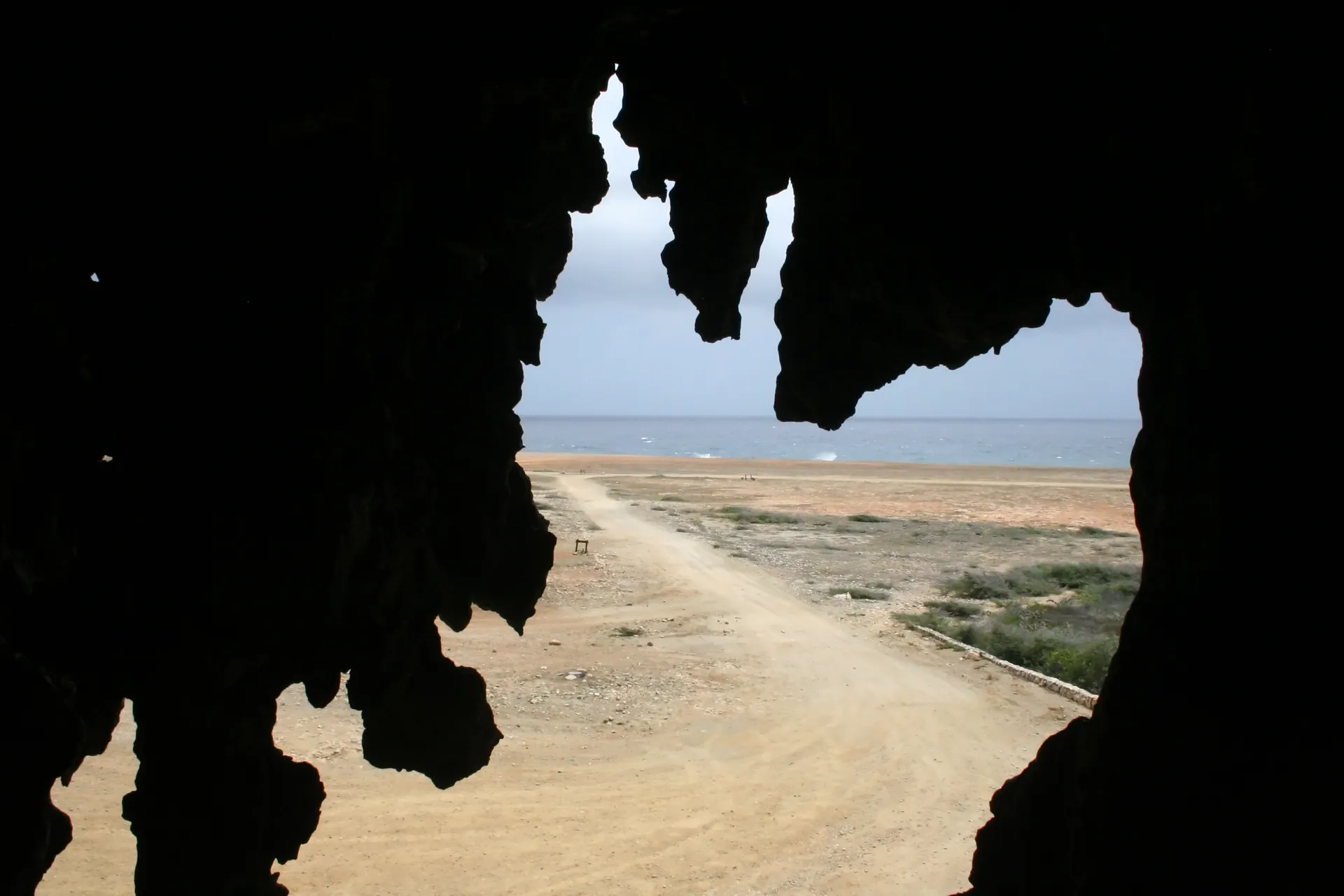
Guadirikiri Cave: Aruba’s Sunlit Caverns, Explained Properly
Two limestone chambers, two collapsed roof-mouths, one colony of very opinionated bats — and a shaft of afternoon light that turns bare rock into a cathedral. Bring grippy shoes and a little patience.
Compare Cave Tours & Park Entry →Written by Marlowe Finch · Bristol / Aruba since 2016 · Updated for the 2026 season
Essential Guadirikiri Cave at a Glance (TL;DR)
- Cheapest Option: The Arikok National Park day pass — paid at the gate in Santa Cruz at roughly AWG 25 per adult (≈€13 / ~$14) — covers Guadirikiri, Fontein Cave and the whole park. There is no separate Guadirikiri cave ticket, and anyone selling you one is improvising.
- Recommended Guided Experience: The National Park Arikok Jeep Safari from around €99 / ~$109 pairs Guadirikiri and Fontein with the Natural Pool (Conchi) in a single half-day, with 4×4 access on roads your rental hatchback should not attempt.
- Advance Booking Window: Book 3–7 days out during high season (December–April) and any week a cruise ship is in port; half-day Arikok jeep slots genuinely do sell out.
- Cancellation Flexibility: Major platforms such as Viator and GetYourGuide offer 24-hour free cancellation on most Arikok tours — worth the small premium over a non-refundable gate purchase if your plans flex.
Guadirikiri Cave Tours & Arikok Experiences
Hand-picked 4×4, ATV and jeep options that actually reach the cave — with comparison pricing, ratings and free-cancellation terms.
Compare 2026 Ticket & Tour Options

★ ⭐ Top Choice
★ Best Overall Pick
National Park Arikok Jeep Safari Adventures
From
$109
(~€100)
via Viator
|

Best All-Inclusive Combo
Aruba Jeep Tour: Natural Pool, Caves and Baby Beach Adventure
From
$89
(~€82)
via Viator
|

Top Customer Favorite
Aruba Natural Pool and Indian Cave Rugged Jeep Safari
From
$99
(~€91)
via Viator
|
Best Budget Choice
Arikok National Park Highlights Safari Express
From
$85
(~€78)
via GetYourGuide
|
|---|---|---|---|
| Duration 4h 30min | Duration 4 hrs | Duration 4h 30min | Duration 2 hours |
| Transport Hotel pickup available | Transport Hotel pickup available | Transport Hotel pickup available | Transport Meeting point or pickup |
| Languages English, Nederlands, Español | Languages English, Nederlands, Español | Languages English, Nederlands, Español | Languages English |
|
Inclusions
✓ Bottled water
✓ Use of Snorkel and Mask
✓ History on sight
|
Inclusions
✓ Local guide
✓ Bottled water
✓ National Park fees
|
Inclusions
✓ Lunch (morning tour only)
✓ Local guide
✓ Transport by open-air 4x4 vehicle
|
Inclusions
✓ Visit to Quadirikiri Cave
✓ Visit to Fontein Cave
✓ Visit to Boca Prins
|
| Cancellation Free up to 24h before | Cancellation Free up to 24h before | Cancellation Free up to 24h before | Cancellation Free up to 24h before |
| Group Size Small Group Tour | Group Size Small Group Tour | Group Size Small Group Tour | Group Size Small / Standard Group |
| Ideal For First-time visitors & top highlights | Ideal For All-in-one sightseeing with multiple admissions | Ideal For Travellers seeking highly recommended experiences | Ideal For General visitors & families |
National Park Arikok Jeep Safari Adventures
Aruba Jeep Tour: Natural Pool, Caves and Baby Beach Adventure
Aruba Natural Pool and Indian Cave Rugged Jeep Safari
Arikok National Park Highlights Safari Express
📅 Live Availability — Check Dates
Why Guadirikiri Isn’t Just Another Hole in the Ground
Most people arrive at Guadirikiri expecting a cave. What they get is a ruin — a collapsed cathedral of limestone with the roof torn open in two places, which is precisely why it’s magnificent. I’ve been coming here since 2016, sometimes in the first grey hour before the gate staff have finished their coffee, and the place still stops me mid-sentence.
You’ll find it spelled four ways before you even reach the parking area: Guadirikiri, Quadirikiri, Quadiri and the Papiamento Cueba di Guadirikiri. They’re the same cave. Search results split between them, signposts mix them, and tour descriptions cheerfully mangle all of it — so if you’ve been chasing “Quadirikiri cave Aruba” and landing on “Guadirikiri”, relax. You’re in the right place.
The cave sits in the south-central sector of Arikok National Park, the protected 34-square-kilometre block that swallows roughly a fifth of the island. From Oranjestad it’s about 30–35 minutes by car; from the high-rise strip in Noord, closer to 40; from San Nicolas, 25. It is not a detour you tack onto a beach day. It is the reason you rent a car.
What the Cave Actually Is
Forget the river-carved caves of Slovenia or Kentucky. Guadirikiri was never bored out by flowing water. This is a dissolution cave: mildly acidic rainwater percolating down through Aruba’s limestone over hundreds of thousands of years, quietly eating the rock from the inside along pre-existing fractures and faults. The two chambers follow those fault lines the way a zipper follows its teeth.
Then the ceiling failed. Twice. Those two collapsed mouths in the roof are why the cave exists as a visitor experience at all — they flood the interior with daylight, keep the air moving, and let the ferns and vines take hold around the rims. Geologists call this a karst system; I call it a limestone honeycomb that someone punched through. The full geology and history breakdown is on its own page if you want the timeline.
The thirty-second version: limestone + acidic rain + faults + a roof that gave way = two sunlit chambers instead of one cold, dark tube. Everything photogenic about Guadirikiri is downstream of that accident.
The Cathedral Room — Where the Light Does Its Work
Chamber One is the wide one, the tall one, the one that makes people whisper without being asked. The floor is pale, dusty limestone rubble — uneven, slightly slippery where dust has settled on smooth rock, and studded with loose pebbles that roll under a careless boot. Some sections underfoot are, frankly, a bit rubbish. Wear trainers with tread.
The main roof opening sits high and slightly off-centre. Between roughly 10:30 and 13:30, depending on season, the sun drops a distinct shaft of light through that hole and paints a moving slab of brightness across the far wall and floor. In December and January it comes in low and warm. In June it’s nearly vertical and brutal. Either way, it migrates — so if you stand still for ten minutes with a camera, you’ll watch the whole scene rearrange itself.
Acoustics are the sleeper feature. Hard, curved, mostly enclosed surfaces make this room a natural amplifier. Normal conversation carries across the whole chamber, and a single loud tour group can flatten the atmosphere for everyone else. Go early, keep your voice at indoor level, and you’ll be rewarded with a silence that feels architectural.
Photography notes, woven in where they belong: brace against the rock lip on the entrance side, expose for the bright patch rather than the shadow (your phone will over-brighten the dark and blow out the beam), and resist the flash. It kills the contrast that makes the shot. There’s a dedicated chamber-by-chamber photo guide with settings and composition angles if you’re serious about it.
The Dark Room and the Bats
Chamber Two is narrower, lower-ceilinged, and — once you’re past the connecting passage — proper dark. Not moody-cinematic dark. Proper, eye-adjusting, hold-your-hand-up-and-see-nothing dark. Some of the best ambient light of the day falls into the second roof opening, which surprized me the first time, but the deep end stays resolutely unlit.
This is the bat room. A resident colony of insect-eating bats roosts in the upper recesses, and you’ll notice them the way you notice weather: first the smell (guano has a sharp, ammoniac edge, strongest after rain), then a dry rustling, then the small silhouettes shifting against the pale patches of sky.
House rules, and I mean these: keep your light pointed low, near the floor or across the wall — never up into the roost. No flash. Ever. A camera flash can wake a roosting bat mid-torpor, and a disturbed colony burns energy it can’t spare. Move slowly, speak quietly, don’t linger directly beneath the cluster. The full etiquette is on the visitor rules page and in the broader Aruba cave etiquette guide — worth ten minutes of reading before you go.
The Legend of the Imprisoned Lovers
You’ll hear the story from guides, from taxi drivers, and from a man near the park gate who tells it better than anyone. It goes like this: a Caquetío chief’s daughter fell in love with a young man he disapproved of, and imprisoned the pair inside the cave. The two roof openings, the version continues, are the holes their souls tore through on the way to freedom.
It is a beautiful story and I love telling it. It is also oral tradition, not documented history — and I’d rather you knew that than repeat it as fact at a dinner party. The archaeological record around Arikok is real and remarkable (Arawak and Caquetío presence, cave drawings at nearby Fontein, ceremonial sites), but the lovers belong to narrative, not excavation. The History & Geology page treats both strands properly, with the verification boundaries marked.
Wildlife Context: What Else Lives Out Here
Arikok is desert scrub, divi-divi, candelabra cactus and volcanic rubble — not jungle. Aruba has no rainforest, no rivers, no waterfalls, and no crocodiles in the wild (the ones you’ve seen on Instagram live at an ostrich-and-crocodile farm, which is a different experience entirely).
What you will genuinely encounter around Guadirikiri: the shoco, Aruba’s endemic burrowing owl, standing sentinel on rock piles; the cododo (Aruba whiptail) whipping across the path; green iguanas that regard you with open contempt; and, if you’re very unlucky and very loud, the cascabel — Aruba’s rattlesnake. Keep to marked paths and you’ll almost certainly see none of the last one. Details on dry-terrain preparation live in the Arikok packing and desert safety guide.
Getting There, Honestly
Yes, you can drive. The park has a paved main route and unpaved spurs; the approach to Guadirikiri is manageable in a normal compact car in dry conditions, but the deeper Arikok tracks — and the road down to the Natural Pool — are 4×4-only and your rental agreement almost certainly forbids them. Check the small print before you test it.
Three realistic options: self-drive (cheapest, most freedom, requires an early start), taxi (agree the fare and the return pickup before you get in — Aruba’s taxis are metered per zone but unmetered negotiations to Arikok happen), or a 4×4 tour transfer (most expensive, zero logistics, includes Fontein and the coast). The transport hub has driving times, parking notes, the step count to Chamber One, and accessibility detail.
Park Hours, Fees and the Dual-Currency Table
One entry pass covers everything inside Arikok, including both Guadirikiri chambers and Fontein Cave. There is no cave-only ticket. Figures below are indicative for the 2026 season — verify against the official Arikok National Park site before you travel, because these have been revised more than once since 2023.
| Item | Detail | Indicative Price |
|---|---|---|
| Park opening | Daily, morning opening (commonly 08:00) | — |
| Last entry | Typically mid-afternoon; confirm seasonal cut-off | — |
| Adult day pass | Covers Guadirikiri, Fontein & park roads | AWG 25 ≈ €13 / ~$14 |
| Child pass | Reduced rate for younger visitors (age bands apply) | ≈ €7 / ~$8 |
| Annual pass | Local/resident and repeat-visitor option | Ask at gate |
| Guided 4×4 half-day tour | Includes park entry + transport + guide | €85–€150 / ~$90–$162 |
| Cave-only ticket | Does not exist — treat any offer as suspect | N/A |
Operator Tour vs Official On-Site Entry
Official on-site entry: cheapest by a wide margin, total freedom over pacing, no schedule. Downside — you queue at the gate in full sun, you drive yourself, and there’s no cancellation safety net if the weather turns or the caves close.
Operator tour: roughly €85–€150 / ~$90–$162 depending on length and vehicle. You get 4×4 access you can’t legally hire, a guide who knows the bat rules and the light timing, hotel pickup, and usually 24-hour free cancellation. On a hot, crowded cruise-ship day, that’s the difference between a visit and an ordeal. Compare the full grid on the Tickets & Tours page.
Top Nearby Points of Interest
Guadirikiri takes 90 minutes. The park takes a day. These are the stops worth pairing with it, with rough drive times from the cave car park.
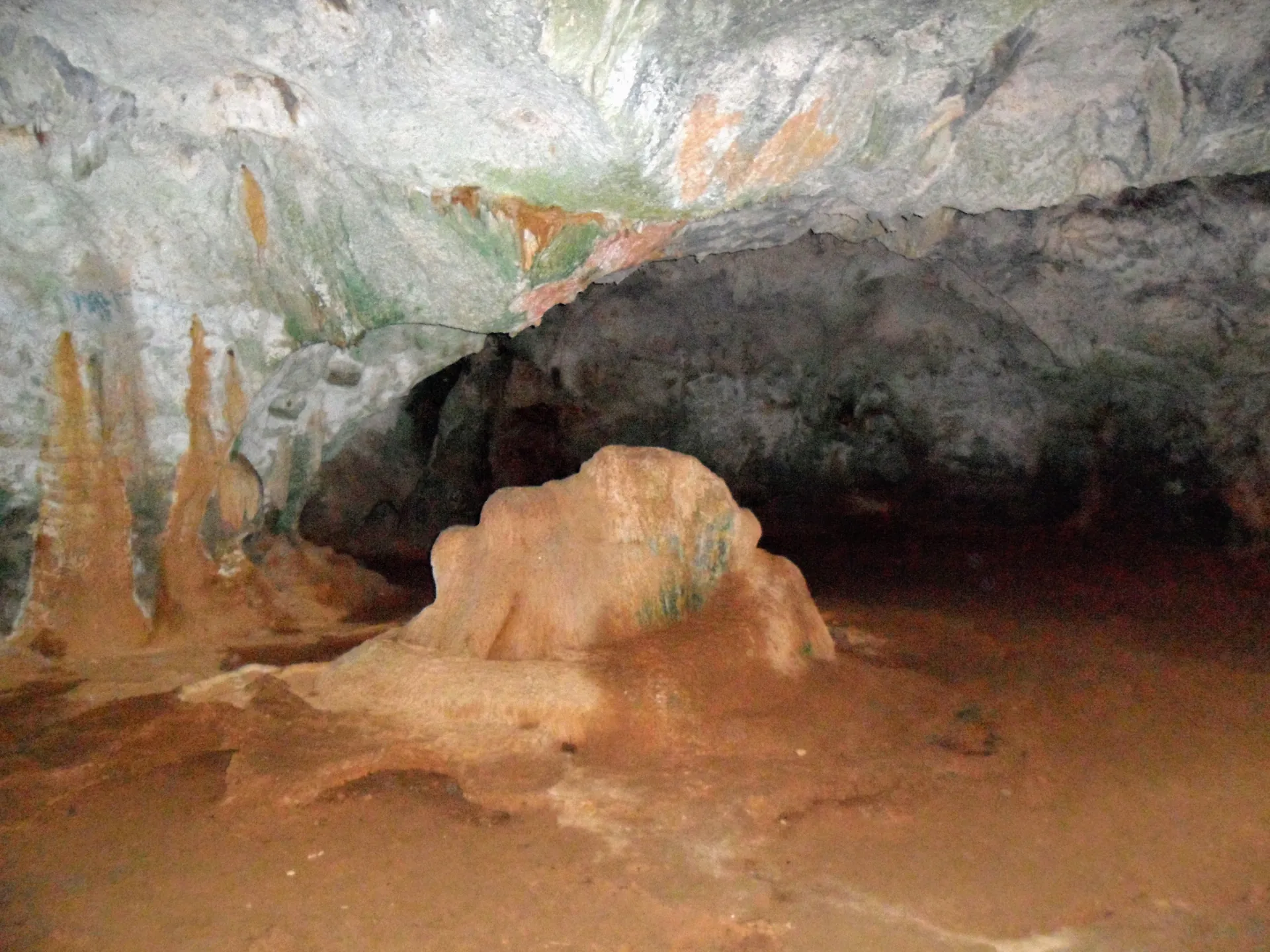
Fontein Cave
Arawak rock drawings in ochre and white, a ranger on the door, and a completely different mood — smaller, darker, and far more archaeological. The natural pairing with Guadirikiri.
Read Guide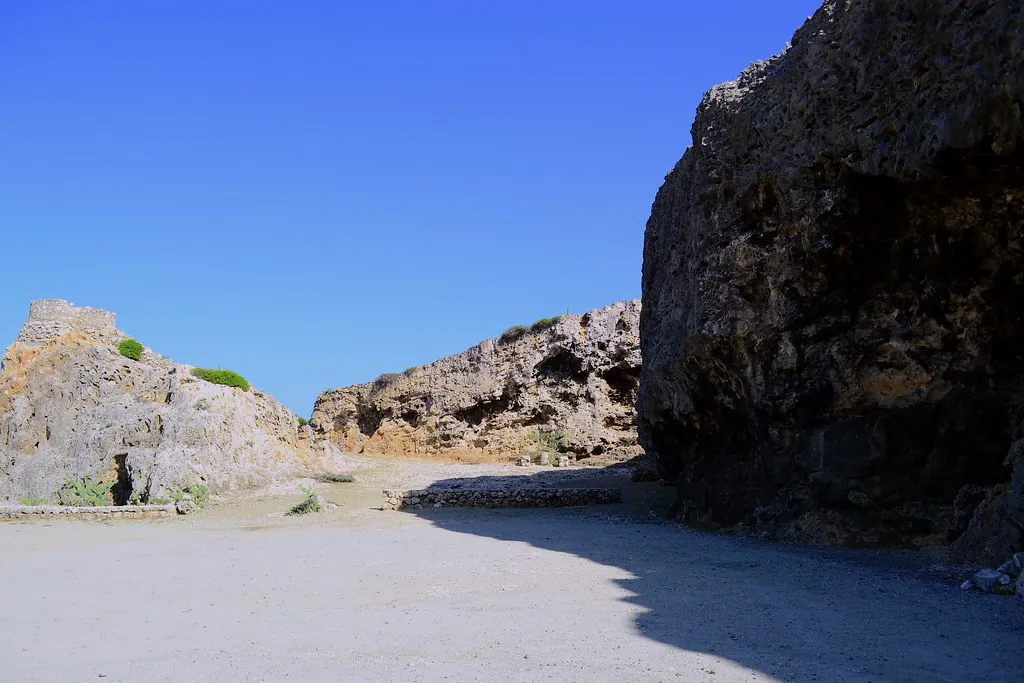
Natural Pool (Conchi)
A volcanic rock basin on the north coast where waves crash over the rim. 4×4 required, and it closes without warning in heavy swell. Check status before committing.
Read Guide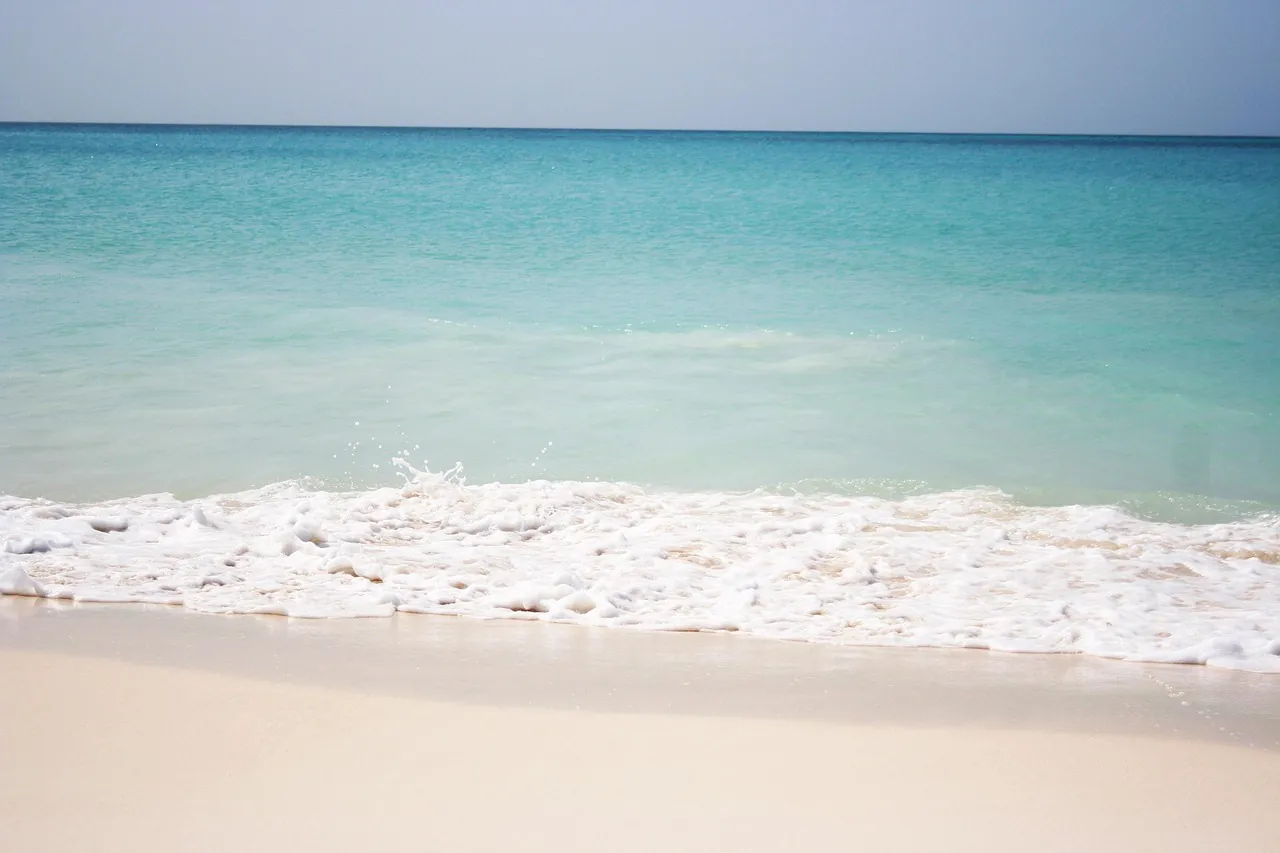
Boca Prins
Where the Arikok dunes meet the sea — limestone cliffs, white sand, and a constant onshore wind. Excellent late-afternoon light and a decent spot to eat a packed lunch.
Read Guide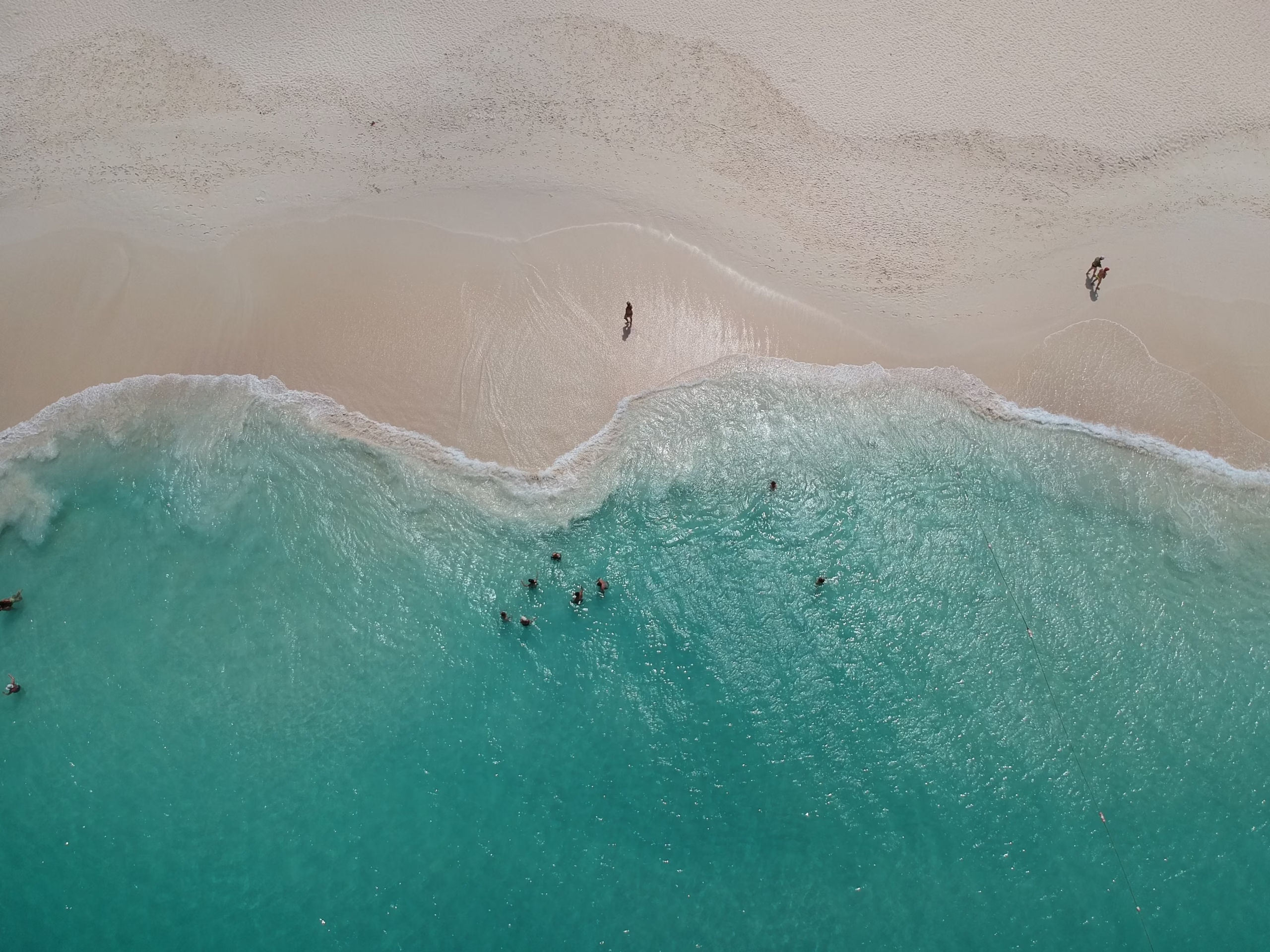
Dos Playa
Two coves, big surf, strong currents and virtually nobody swimming. Go for the drama, not the dip. Photography here is superb in the golden hour.
Read Guide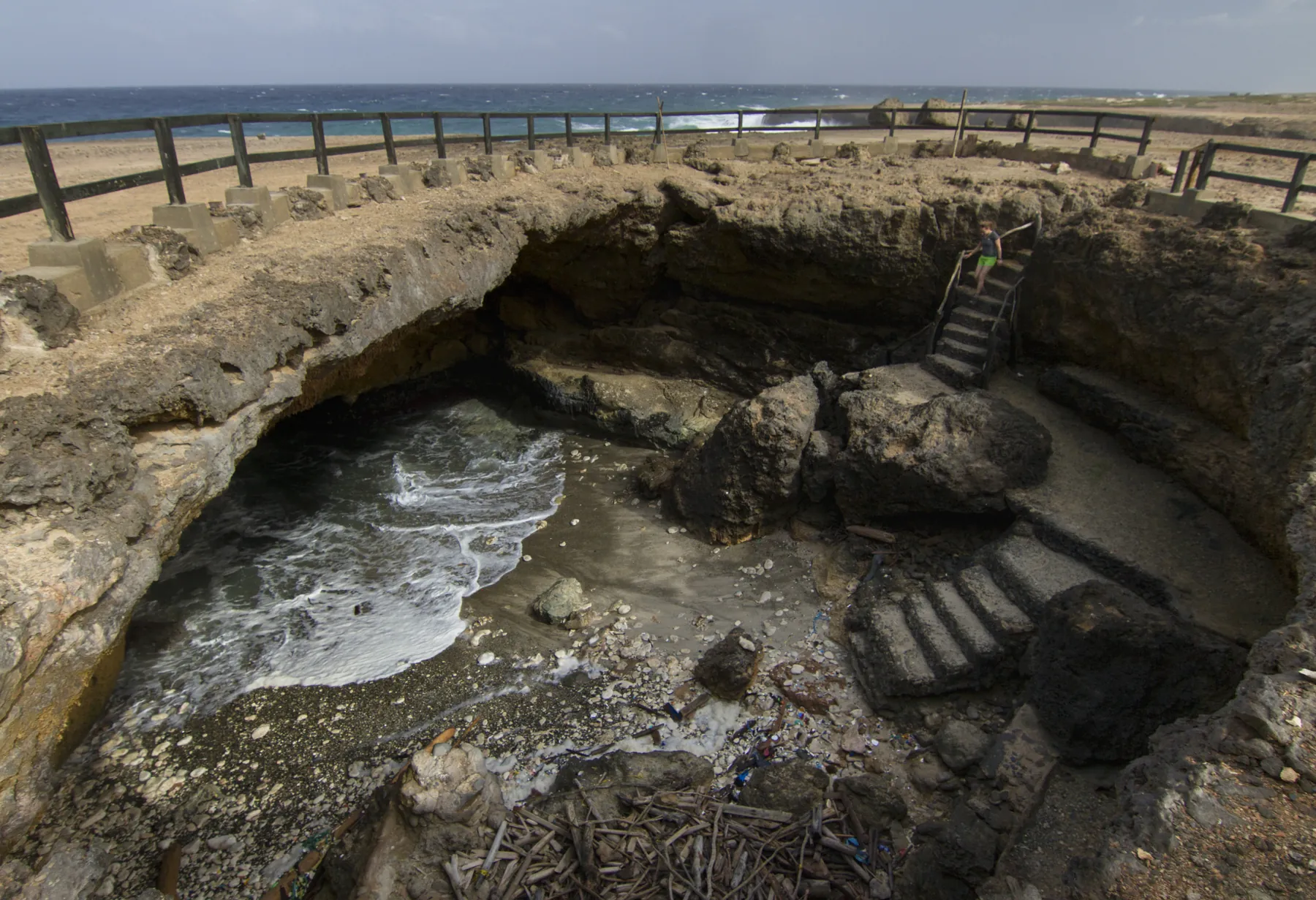
Miralamar Ruins
The stone shell of a 19th-century gold-mining director’s house, slowly being reclaimed by cactus. Quiet, strange, and worth fifteen minutes of your time.
Read Guide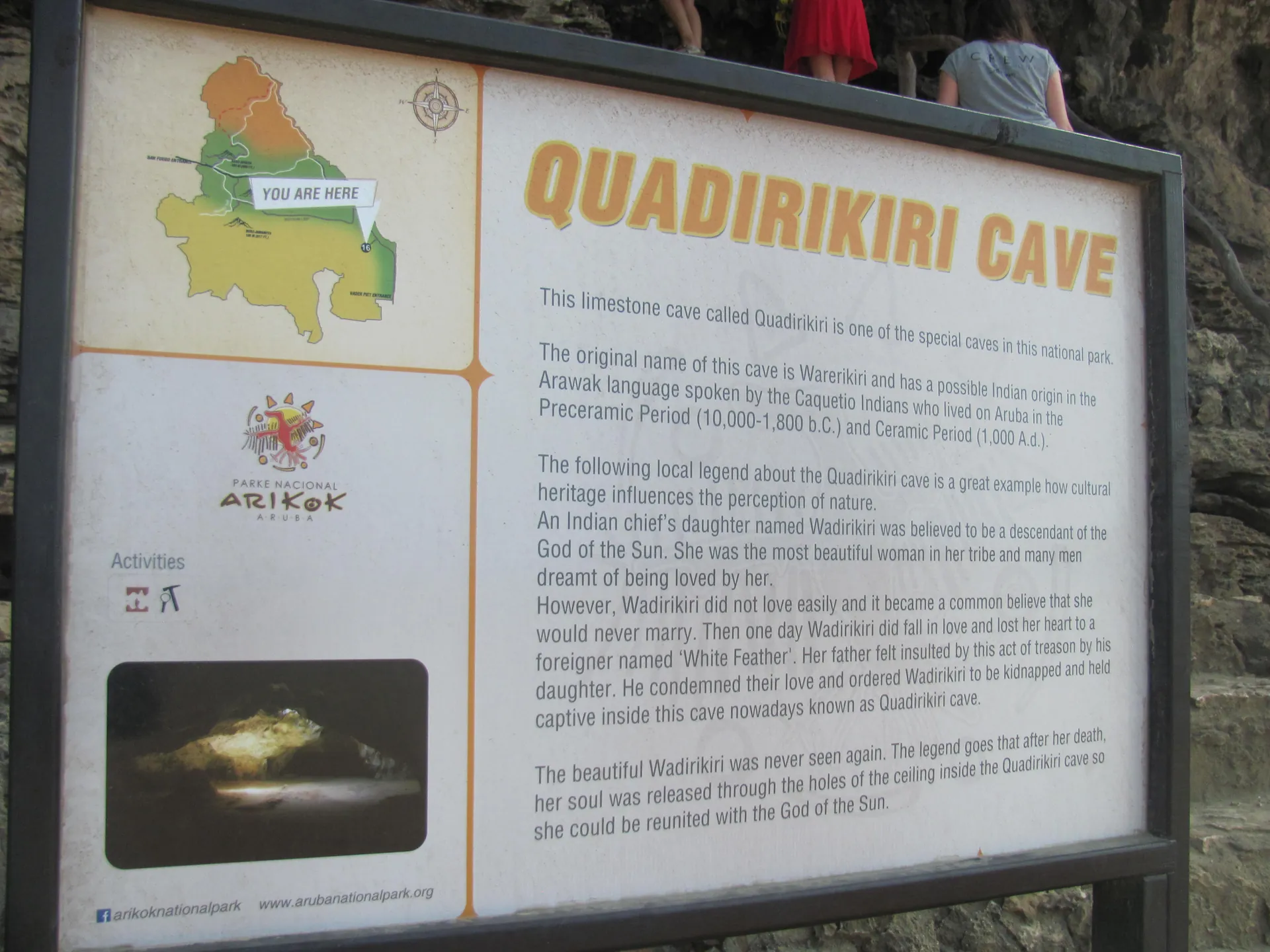
Quadirikiri Viewpoint
The rocky rise above the second chamber, looking back over the collapsed roof-mouths and out to the scrub plain. Sunset here is criminally underrated.
Read GuideActivity Clusters for Your Arikok Day
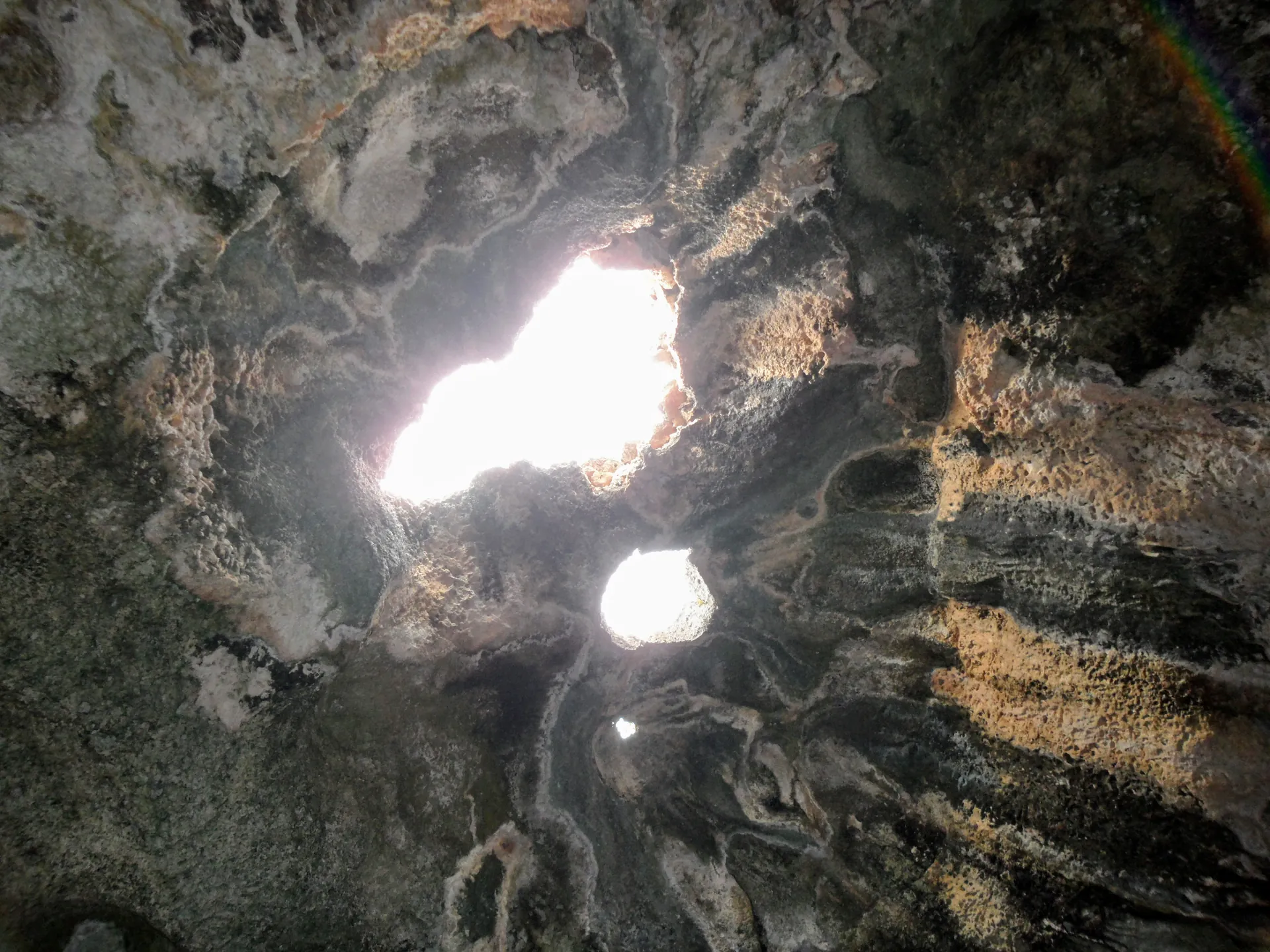
Cave & Light-Beam Photography
When the shaft lands, how to expose for it, why your phone’s night mode is lying to you, and where to stand in each chamber. Includes bat-safe technique.
Read Guide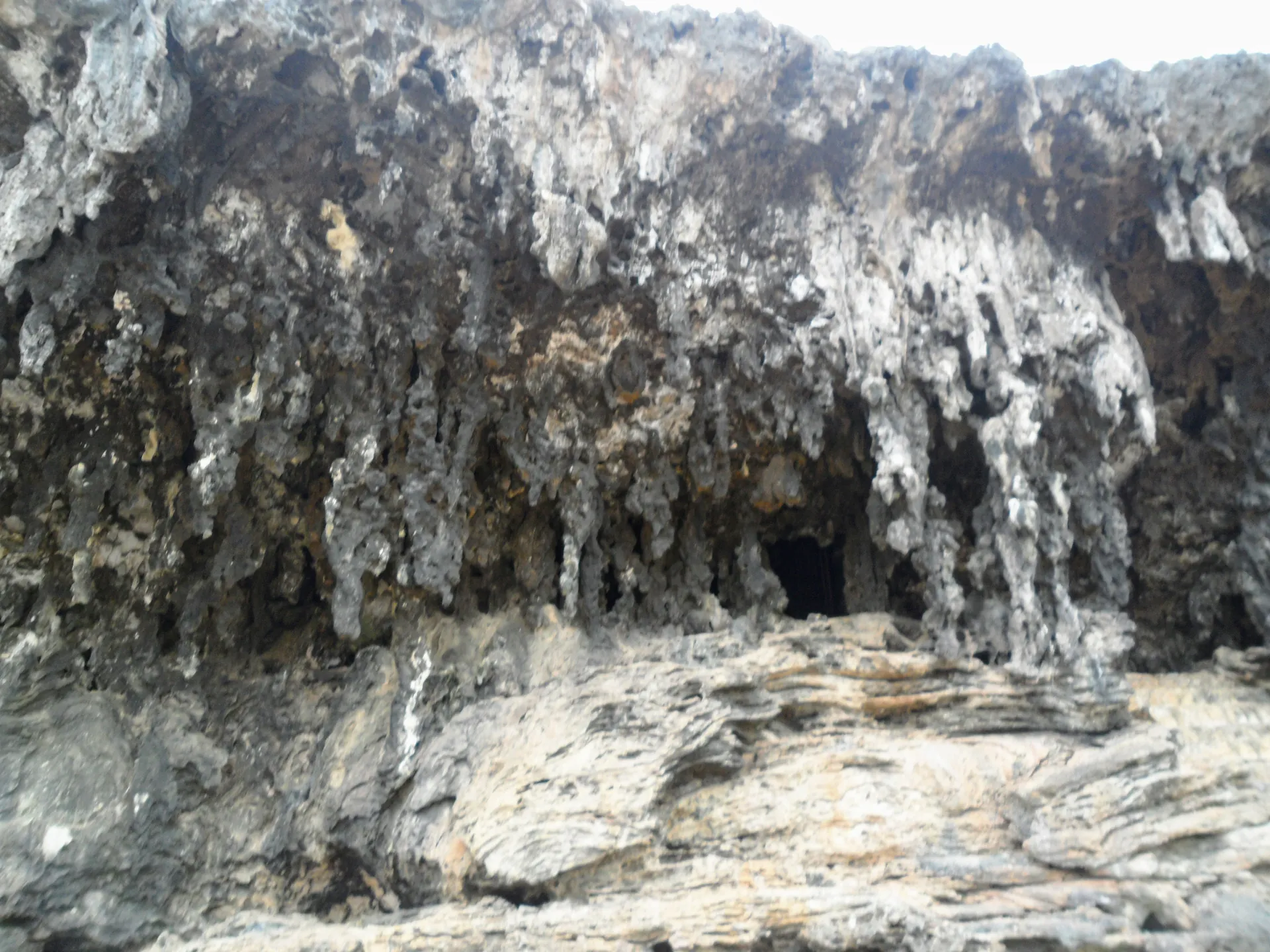
Best Time to Visit
Morning versus midday beam angles, cruise-ship surge windows, wet-season closures and how bat activity shifts through the day. Light, heat and crowds, decoded.
Read Guide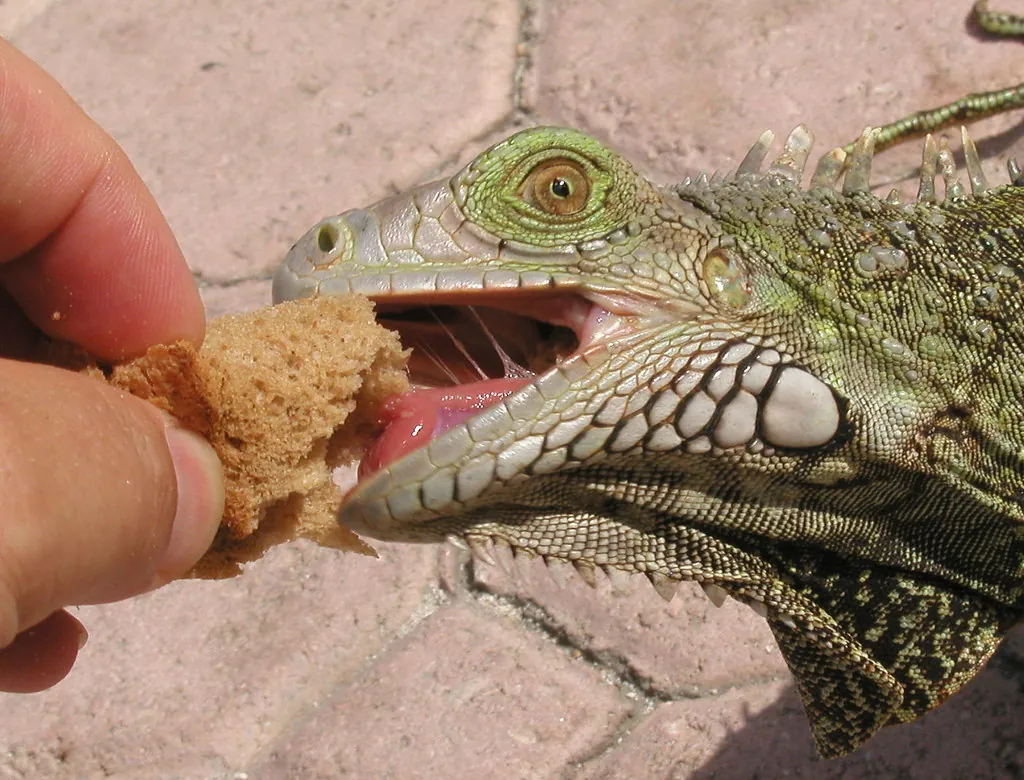
Arikok Packing & Desert Safety
Water volumes, closed-toe footwear, offline maps, phone-signal gaps and the honest limits of a standard rental car. Read this the night before.
Read Guide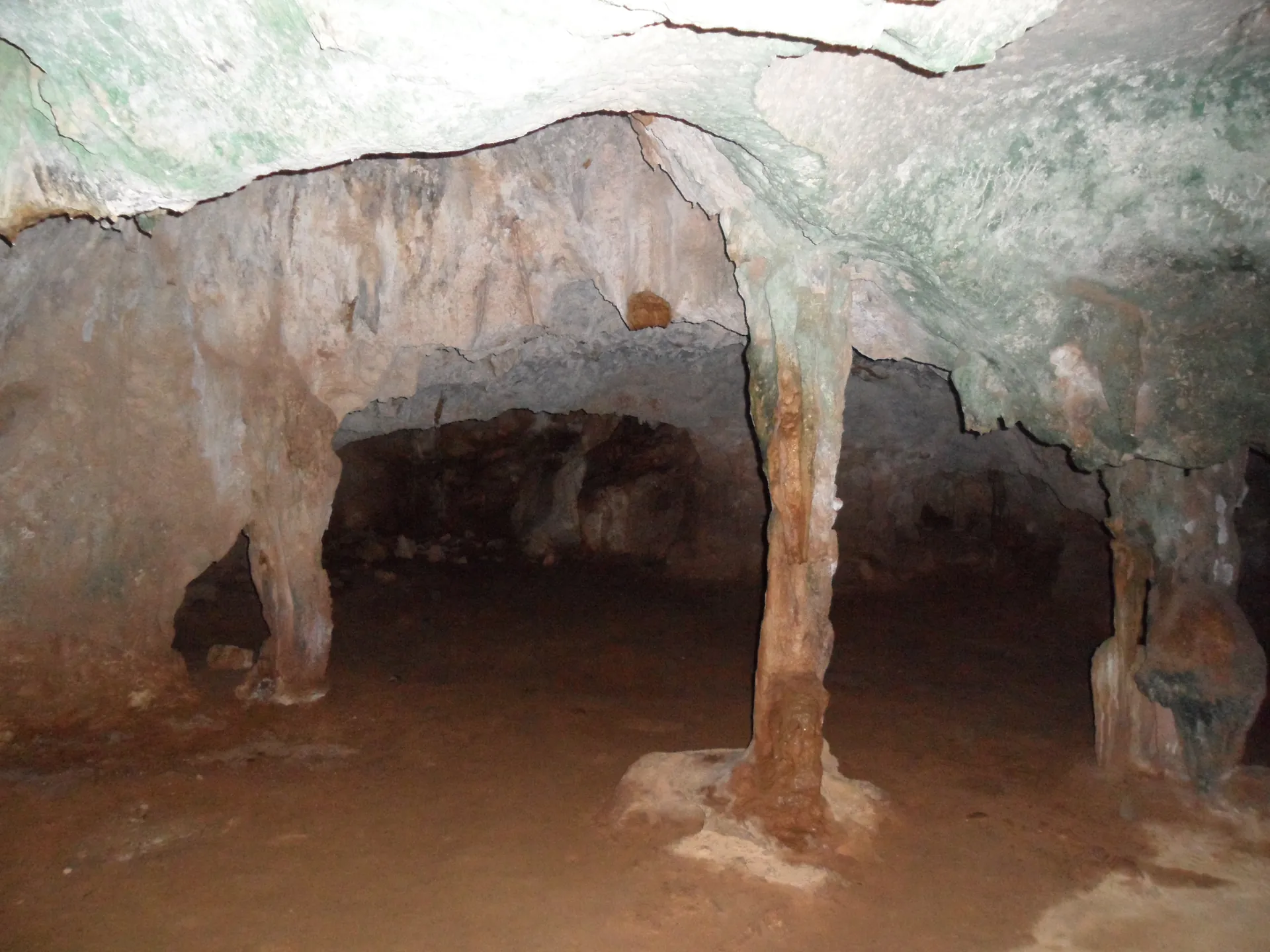
Cave Etiquette Across Aruba
Flash rules, roost distance, touching formations, waste and ranger instructions — applied across Guadirikiri, Fontein and the smaller Arikok caves.
Read GuideThings to Avoid in Guadirikiri Cave: Tourist Traps & Red Flags
Proving editorial independence through unbiased criticism. These common tourist traps, booking mistakes, and safety hazards ruin visits when unplanned.
Fake “Cave Tickets” Sold Near the Gate
There is no standalone Guadirikiri cave ticket. Anyone offering one — at a roadside stall, from a clipboard near the parking area, or through a reseller page with no operator named — is selling you either a markup on the park pass or nothing at all. Buy the park day pass at the official gate, or book a named licensed operator with a review history.
Unmetered Taxi Negotiations to Arikok
Taxis in Aruba are metered by zone, but long runs into the park are frequently quoted as a “flat rate” on the spot, often without a return arrangement. You can end up stranded in a scrubland car park with no signal and a driver who has already gone. Agree the fare and the pickup time in writing before you set off, or take a tour transfer.
Midday Arrival in Full Sun With No Water
Arikok regularly runs above 33°C with hard UV and almost no shade between the car park and the cave mouth. Many visitors arrive at 12:30 with one small bottle of water and a sunburnt neck. Go before 09:30 or after 16:00, carry two litres per person, and wear a hat for the approach walk.
The Persistent “Swimming Hole” Myth
There is no swimmable pool inside Guadirikiri, and swimming is prohibited in the park’s cave pools — including at Guadirikiri and the closed Quadirikiri pool area — for safety and conservation reasons. Old blog posts and reused stock footage still imply otherwise. Ignore them; there is no lifeguard, no clean water, and no access.
Rigid, Non-Refundable Tour Slots
Arikok closes caves after heavy rain and can shut the north-coast roads without notice. If you’ve booked a strictly non-refundable departure, a wet week can cost you the whole booking. Pay the small premium for 24-hour free cancellation — it’s the single most useful line item on a cave tour booking.
Best Time, Light Window and Crowd Flow
Morning (08:00–09:30): coolest air, softest light, fewest people, and the bats still settling. The beam hasn’t dropped into Chamber One yet, so if you’re here purely for the light shaft, this is your orientation visit.
Midday (10:30–13:30): the shaft is at its most dramatic and most vertical. It’s also the hottest, brightest and busiest window, and the one cruise-ship excursions target. If you’re on a tight schedule, this is when you’ll get the shot — and when you’ll share it with forty strangers.
Late afternoon (16:00 onward): the light goes warm and raking, crowds thin to almost nothing, and the whole Arikok plain turns amber. Best all-round experience in my book. Just confirm the park’s last-entry time, because it moves with the season.
Wet season (roughly October–December): dramatic skies, greener scrub, and genuine closure risk. Rain makes the limestone approach slick and the park will shut caves without apology. Check before you drive.
Where Guadirikiri Sits in Aruba
Arikok National Park, south-central Aruba — roughly halfway between Oranjestad and San Nicolas.
Guadirikiri Cave: Frequently Asked Questions
Can you drive to Quadirikiri (Guadirikiri) Cave, Aruba?
Should I book Guadirikiri cave tickets in advance or buy on-site?
Fontein Cave vs Guadirikiri — which Aruba cave should I visit?
Are there any natural caves on Aruba?
Are there any natural swimming holes in Aruba, and why is the cave pool closed?
Is it worth going to Arikok National Park?
Do you need a tour to see Guadirikiri Cave, or can you go independently?
How long do you need at Guadirikiri Cave?
Ready to Walk Into the Light?
Compare rated Arikok jeep, ATV and cave tours with free cancellation — or grab the essential trip-planning guides and drive out yourself.
See Guadirikiri Tours & Prices →Sources & verification: Figures, opening patterns and fees in this guide are indicative for the 2026 season and must be confirmed before travel against the official Arikok National Park authority, the Aruba Tourism Authority, and licensed operator listings. Cave safety and bat-disturbance guidance follows the principles published by the Bat Conservation International and general showcave practice set out by the U.S. National Park Service; limestone karst terminology follows USGS definitions. Written by Marlowe Finch — see also the transport hub, visitor rules and best-time guide.