Aruba Cave Etiquette: Bats, Formations, and Responsible Visiting
My first descent into Guadirikiri came in February 2016, three weeks after I moved half my life from Bristol to Aruba. A woman behind me whispered that it felt like a cathedral, then pointed a compact camera at the ceiling and popped the flash at a sleeping colony. She meant nothing by it, and that is the trouble with cave etiquette: almost nobody sets out to cause damage, and the damage happens anyway.
Here is the honest version. Aruba’s caves are working bat roosts and slow-growing geological archives, not photo backdrops, and the park rules protecting them are shorter and plainer than most visitors expect. This guide runs region-wide and uses Arikok National Park as the live example (bon dia if you are reading it in the car park above Santa Cruz). Most of what follows is common sense you already carry around, which is precisely why it still gets broken every single day. The site-by-site specifics live on the Visitor Rules page; what I want to do here is explain the behaviour, the light, and the maths sitting behind both. Pair it with the best time guide and you will arrive knowing when the sun does the work for you.
The Geology Underfoot: Why ‘Just One Touch’ Is the Whole Problem
The rock you walk on inside Arikok is fossil coral. These limestone terraces were reefs sitting underwater a couple of million years back, then tectonic pressure shoved the whole lot upwards, and rainwater mixed with carbon dioxide from the air and the soil has been dissolving it ever since. That slow acid bath carved the chambers, widened the cracks, and left the surrounding limestone honeycombed with voids you never see from the trail. Arikok’s volcanic core is older still, which is why the park looks like two different islands stitched together.
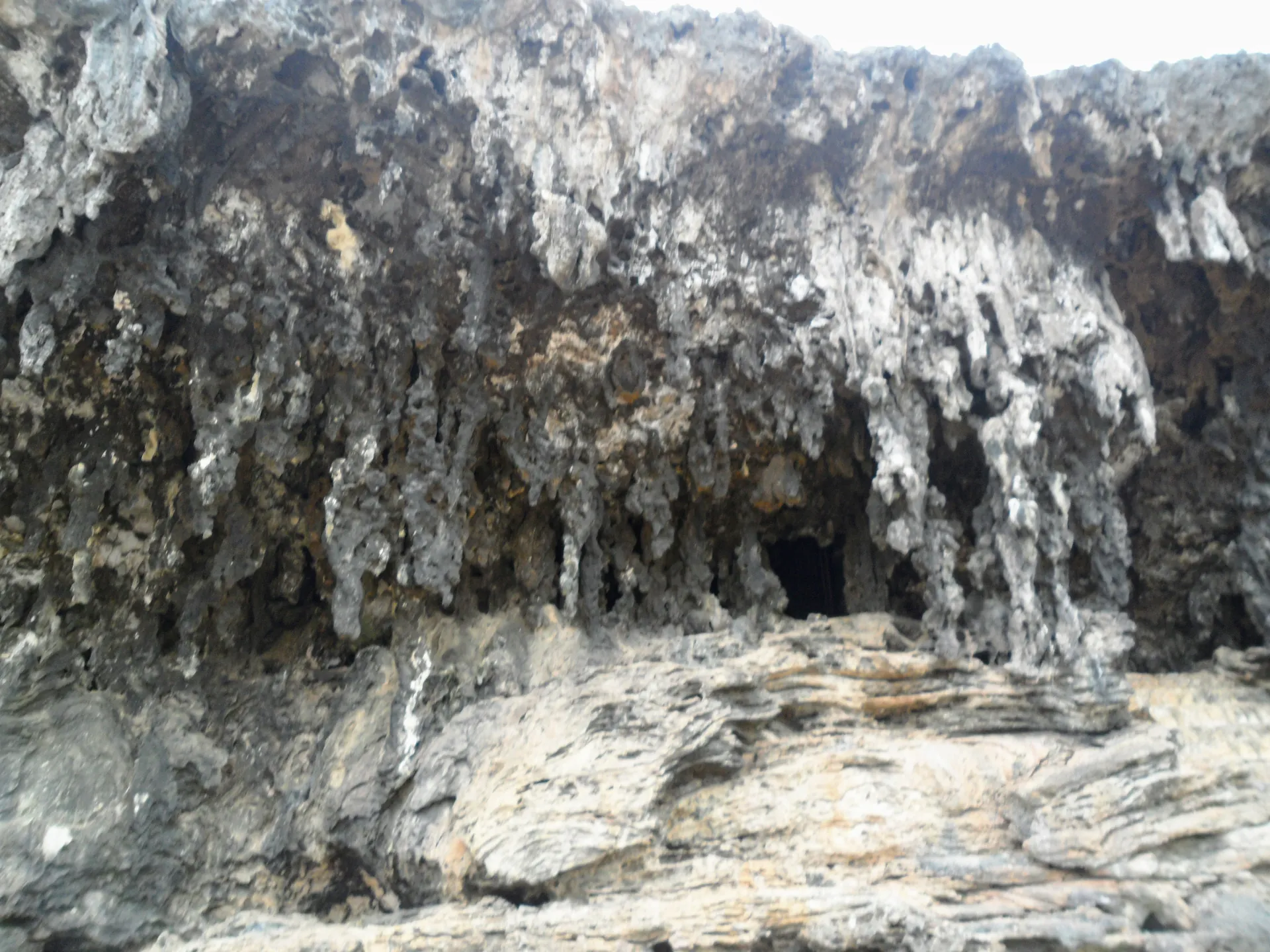
Formations are the other half of the story. When a drip of mineral-rich water hits a cave ceiling, it releases carbon dioxide and drops a film of calcite behind, and that film is a few microns thick at best. Now put a fingertip on it. The oils and salts in your skin change how the water film behaves on that exact spot, and deposition stops where you touched. Not slows down: stops. In Aruba’s climate, where most of the annual rainfall arrives in a short winter window, a stalactite grows at a pace you could measure with a ruler across several human lifetimes. A snapped one is gone in the sense that matters to you. The full geological story, including the coral origins and the collapse events that opened the roof, sits on the history and geology page if you want the deep version.
A ranger at Fontein told me she hears the same sentence four or five times a week: “Sorry, I didn’t know I wasn’t allowed.” She is very patient about it. The rock is not, because it cannot grow back on our schedule.
Aruba’s park authority publishes its own protection guidance for the caves, and it is worth ten minutes of your evening: Aruba National Park Foundation [Official Website].
The Etiquette Matrix: What’s Fine, What Isn’t, and Why
Print this in your head, or screenshot it, because the whole post in one table looks like this.
| Situation | Fine | Not fine | Why it matters |
|---|---|---|---|
| Bats overhead at the roost | Quiet observation from the path, red light or no light at all | White flash, clapping, shouting to wake them | An aroused bat burns fat reserves it cannot replace before the next feed |
| Flash photography near a roost | Flash on bare limestone with no bats in frame | Flash at any bat, any angle, any distance | Repeated light exposure drives colonies to abandon a roost |
| Touching formations | Hands in pockets | One finger as a photo prop | Skin oils and moisture halt calcite deposition permanently |
| Standing water and cave pools | Looking from a safe distance | Wading, swimming, splashing | Closures are safety and wildlife decisions, not suggestions |
| Food and drink inside | A water bottle you carry back out | Snacks, wrappers, sunscreen-slick hands on rock | Food waste draws pests and shifts the guano ecology |
| Guided or ranger-led sections | Following instructions exactly | Wandering off for a better angle | The guide knows which chamber the colony is breathing in this month |
| Litter | Packing out everything, fruit peel included | Leaving anything at all | Leave-no-trace applies underground, and nothing here blows away |
Four columns, seven rows. That is genuinely the entire code of conduct, and none of it asks you to have a bad time.
Two Arikok Caves, Two Sets of Manners
Fontein Cave: Drawing Room Rules
Fontein is the one with the Arawak petroglyphs on the walls, and access runs through a ranger or an accredited guide who lights the panels for you. The etiquette pressure here lands squarely on hand contact and flash, because the drawings sit at exactly the height a curious hand reaches without thinking. Keep your arms at your sides and let the guide’s beam do the work. For the wider park picture, the Arikok hub maps how Fontein, Guadirikiri and the natural pool fit into one loop.
Guadirikiri Cave: Open Roof, Full House
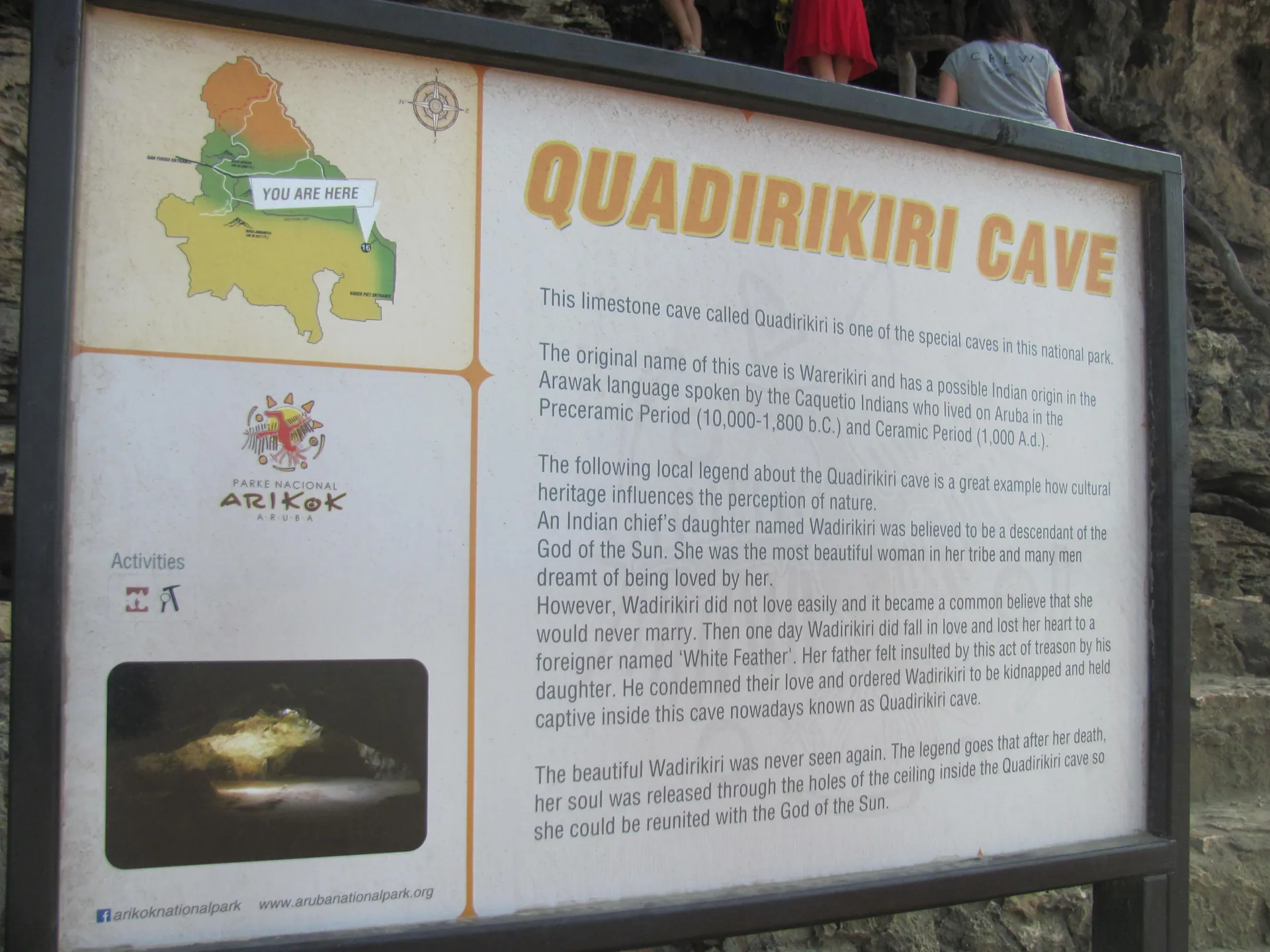
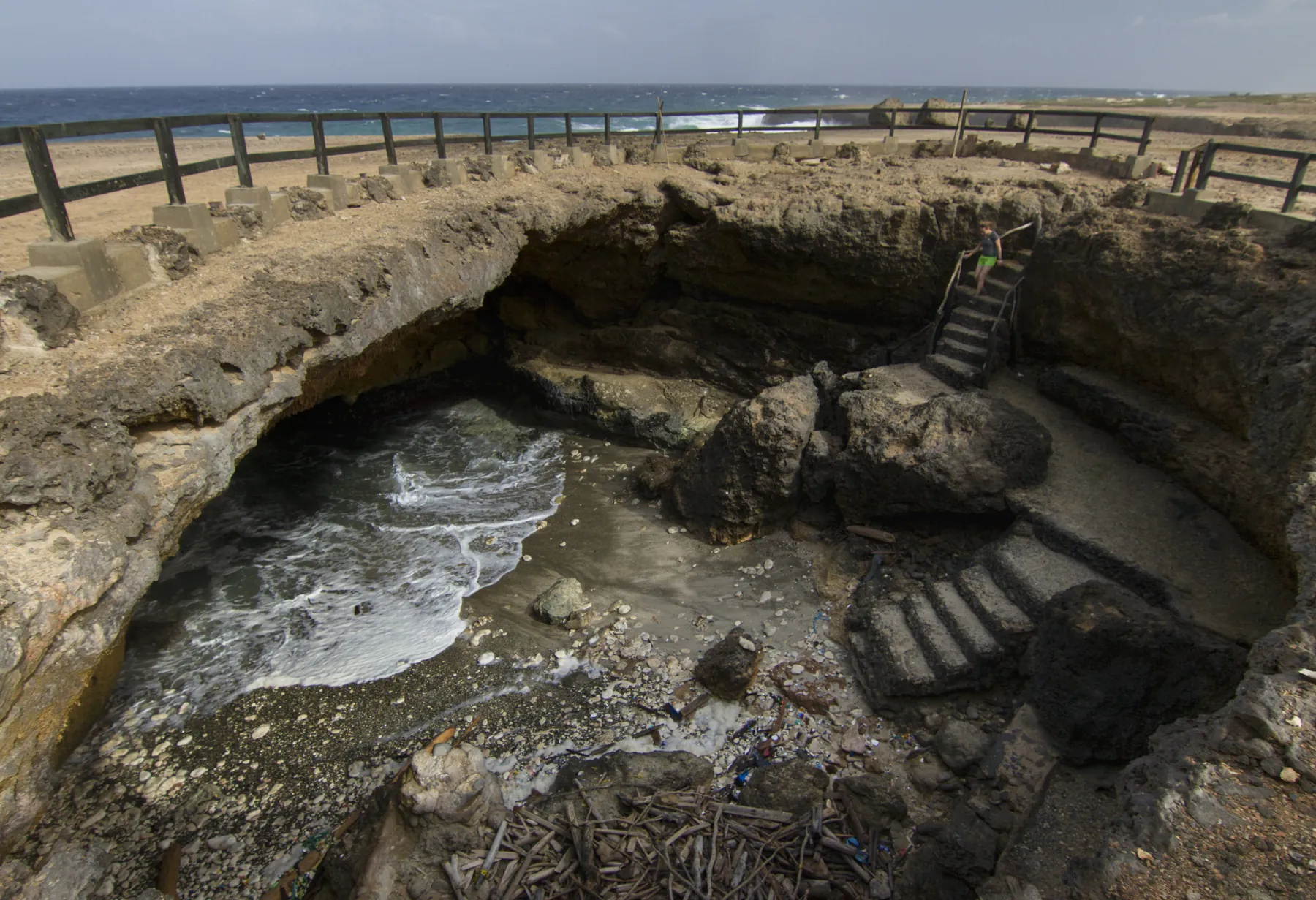
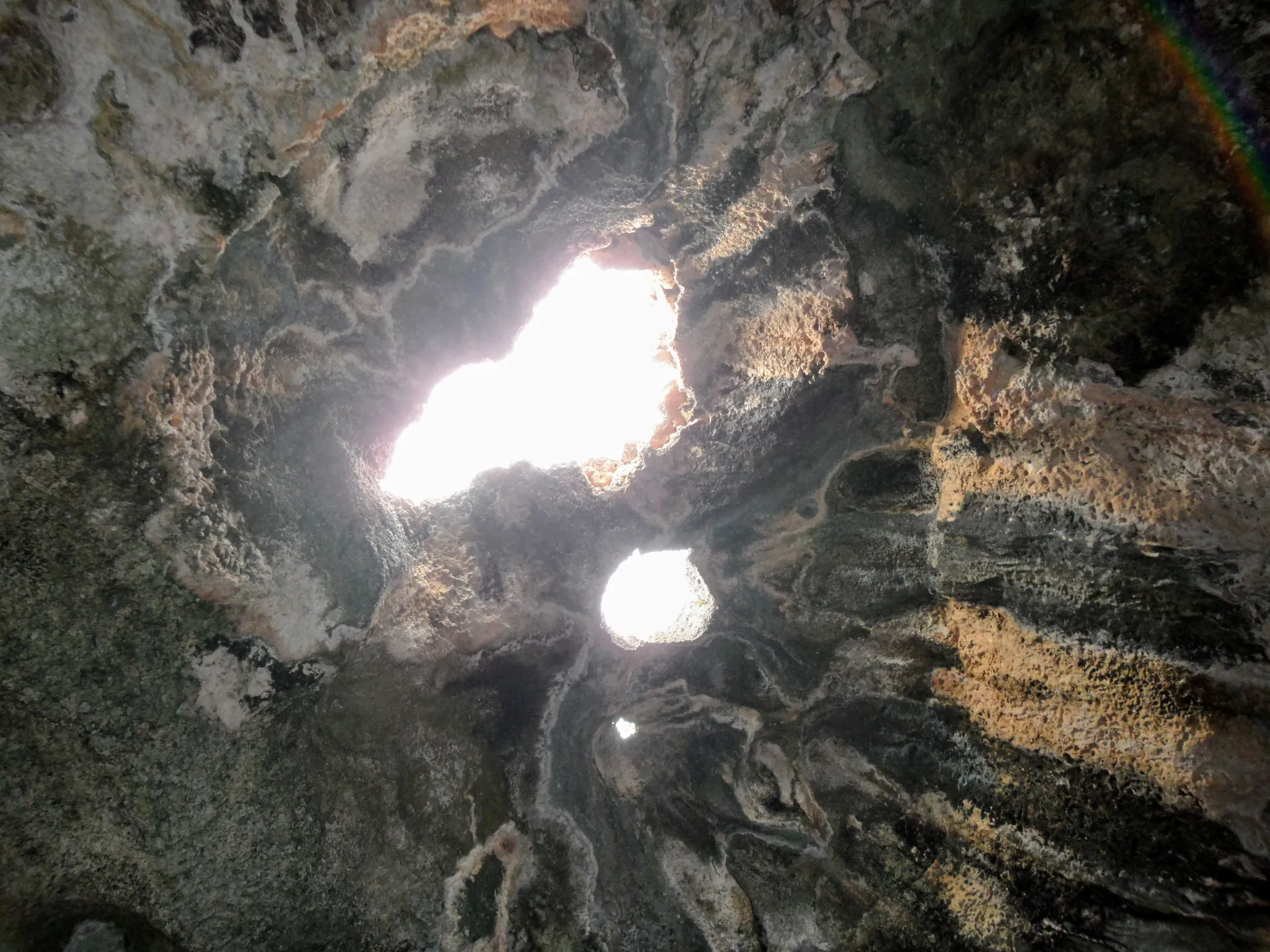
Guadirikiri (spelled Quadirikiri on plenty of maps, and both are accepted) has two chambers with collapsed roof holes that drop daylight in solid columns onto the floor. A resident bat colony occupies the darker reaches, so the pressure shifts to noise and torch discipline once the beam comes through the ceiling. Aim your light at the floor, save the full-output beam for the walk out, and book the Fontein versus Guadirikiri comparison if you only have room for one cave in your day.
Bats: The Residents You Didn’t Book
Aruba’s recorded bat species are mostly insect-eaters and nectar-feeders. The funnel-eared bat is the cave specialist, dangling from ceilings in the dark chambers, while the long-tongued bat works the agave and cactus flowers after sunset. There are no vampire bats on the island, no blood-drinking horror show, and the fluttering panic most people feel on entering a roost is a reaction to the sound of wings rather than any real threat. That flinch is also the single biggest driver of bad behaviour underground. People shriek, torch the ceiling, and the colony takes the cost.
Bats matter here beyond the cave walls. They eat a serious volume of night-flying insects, and they pollinate and seed the plants that hold Arikok’s sandy soil together. Caribbean bats do not carry white-nose syndrome in the way North American populations do, and that is not permission to handle them. Disturbing a roost counts as damage under park rules, and a colony that leaves does not come back next season on request. Bats can carry rabies, so the handling rule is absolute: never pick up a grounded bat, and tell a ranger instead. Bat Conservation International’s guidance on roost disturbance is worth reading if you want the science behind the quiet: Bat Conservation International [Official Website].
- Keep voices low once you are under a roost ceiling, which usually means about ten metres past the entrance.
- No flash at any angle, including a “just one” from the far side of the chamber.
- Red or low-output light only, and only where the park permits it.
- Never handle a grounded bat. Note the spot, find a ranger, let them deal with it.
Quiet is the cheapest conservation tool you will ever carry into a cave. It weighs nothing and it works every time.
Photography Manners That Keep the Colony Calm
Almost every good photograph I have taken inside Guadirikiri used available light and a steady hand. The flash-versus-no-flash argument collapses once you look at what actually makes a cave image work: the light shaft itself, the texture of the limestone, and a foreground person or formation to give the beam scale.
You can get the shot without the flash. Raise the ISO instead and accept a little grain, which suits limestone far better than a blown-out white ceiling anyway. Brace the camera against a wall you are allowed to touch, use a phone’s night mode for the beam shots, and treat any tripod rule as a rule rather than a challenge. The hierarchy is simple enough to memorise: no flash on bats, no flash on petroglyphs, and no flash anywhere a ranger tells you not to. Red-filtered torches work for the walk in and out, though they are not a licence to light up a roost ceiling.
The light columns at Guadirikiri are a daylight phenomenon, so no amount of artificial light will recreate them at four in the afternoon. Plan around the sun, not around your flashgun. Full camera settings, chamber-by-chamber angles and the beam timetable live on the photos and chambers hub, with timing detail on the best time page.
Rangers, Closures, and the Instructions You Actually Follow
A ranger knows which chamber the colony is roosting in this week, which passage the bees have taken over, and whether last night’s rain left standing water somewhere it should not be. No blog can hand you that on the morning you visit, which is why the uniform outranks anything you read here. Guided access applies where the park says it applies, and it changes with season, staffing and wildlife. Getting redirected is not a scam. It is a person doing their job with information you do not have.
The cave pools are the topic that refuses to die. Aruba’s cave and rock pools are not swimming holes, entry is closed to visitors, and the closures exist for safety and for the ecology of the water itself. You will still see tour listings that imply otherwise, and the honest answer is that descriptions get recycled faster than rules do. Read a closure notice, ask if anything is unclear, and then move on without an argument. Logistics, park entry and how you get out here in the first place belong on the transport page, not in this one.
- Check the board at the entrance for same-day closures before you pay or park.
- Confirm the flash and torch rules with staff face to face, not from a blog from 2019.
- Ask a ranger which chamber the colony is roosting in before you head down.
- Report damaged formations or a grounded bat. Nobody gets fined for being the person who mentioned it.
Waste, Water Bottles, and the Litter You Swear You Won’t Drop
Caves are not breezy. There is no wind in there to carry a wrapper into the bushes where nobody will notice, and no rain to wash anything away. Whatever you drop stays exactly where it lands, visible in every photograph taken from that angle for the next decade, and the cave does not need your initials scratched into it either.
No food inside, and that includes the banana you brought for the drive. Carry your water bottle back out, take the fruit peel with you, and treat “biodegradable” packaging as litter with better marketing. Stacking stones in a chamber is a beach habit that does not belong in a national park, and it moves rock that other things live under, sometimes the wrapper off your granola bar is the least of it.
The desert half of the visit needs its own preparation, and I have covered hydration, footwear and heat timing in the Arikok packing and desert safety guide. The cave is one stop on a hot loop, not a cool room you can hide in all afternoon.
Etiquette Is Just Being a Decent Guest
Nobody is asking you to whisper through your whole holiday. The ask is smaller than that: behave like you were invited into someone’s home, because a colony of bats and a limestone formation two million years in the making both got here long before your rental car did. Come quietly, bring a torch you can dim, and leave the place exactly as you found it.
If you would rather have someone else handle the driving and the timing, guided options that include Arikok cave stops are listed on the tickets and tours page.