Driving to Guadirikiri Cave is not difficult. It is, however, the sort of drive that punishes confidence and rewards preparation, mostly because the final few kilometres run on gravel that your rental agreement probably has opinions about. Guadirikiri occupies the eastern half of Arikok National Park, and reaching it means a park pass, a signed turnoff, a slow foot on the accelerator, and a willingness to abandon whatever schedule you set for the morning.
This page handles the logistics: roads, gates, fees, taxis, transfers, and the quiet clauses in rental contracts that nobody reads untill something goes wrong. If you want the cave itself, the light shafts and the bats and the honeycombed limestone, start with the definitive guide. Here we are talking about how you physically get there, and what it costs.
Where Guadirikiri Actually Sits
Guadirikiri, also written Quadirikiri, sits roughly 1.5 km inland from Aruba’s windward coast and about 2 km south of Fontein Cave. Santa Cruz is the nearest town, though you would never spot the cave from any public road: the limestone sits low, behind scrub and cactus, and the collapsed roof openings only appear once you are almost on top of them. You drive to a parking area, walk a short path, then descend a staircase into Chamber 1. No visitor centre. No turnstile. No queue rope.
One thing to settle before you plan anything: the cave pool in the second chamber is closed. Fundación Parke Nacional Arikok shut access to the water because of bat disturbance, fragile limestone, and the plain hygiene issue of a freshwater pool inside a roost. You can look into Chamber 2 from the viewing area. You cannot swim, wade, or dip so much as a finger. Full detail lives on the visitor rules page.
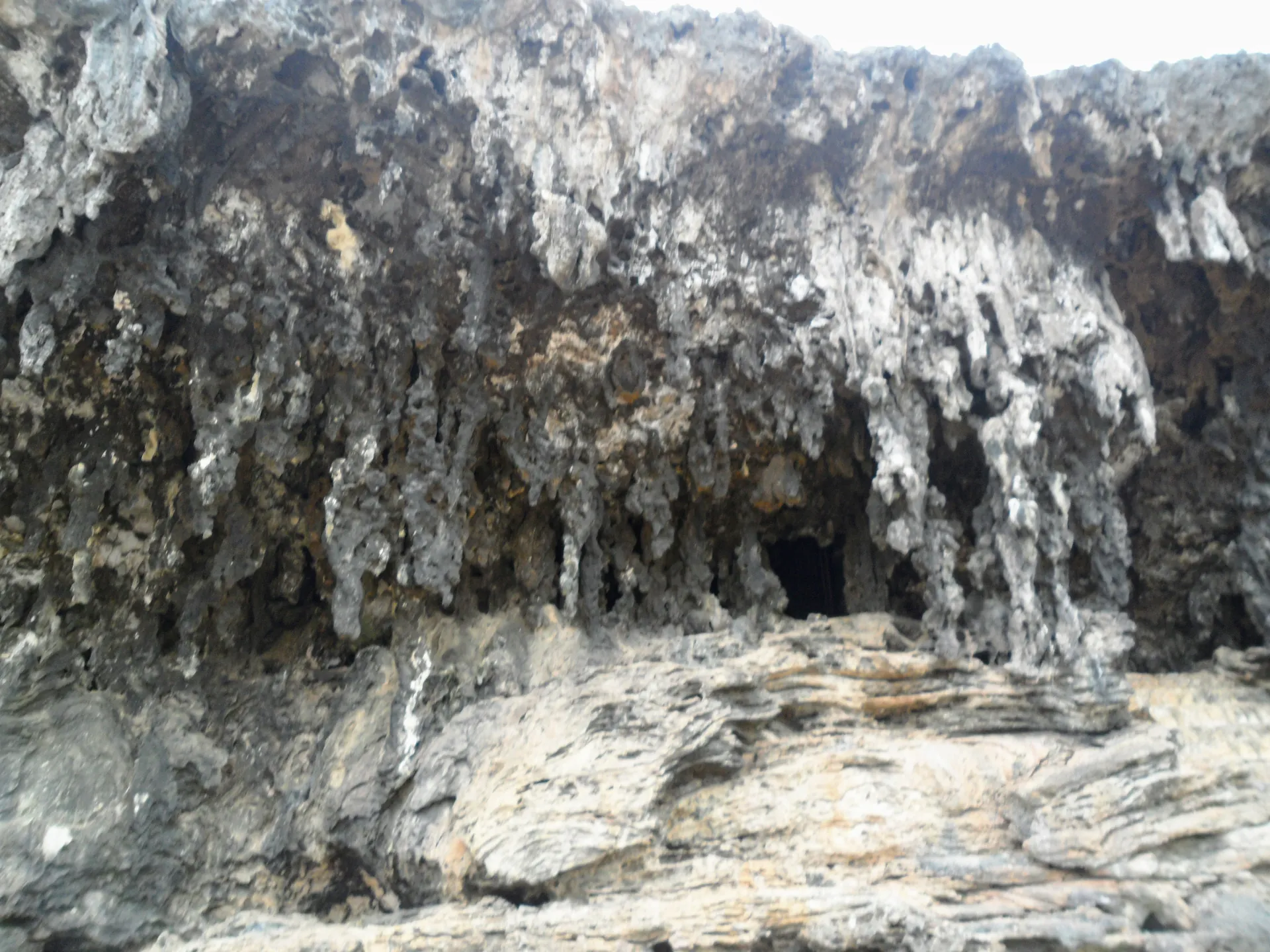
For a Quadirikiri cave Aruba map you can rely on without signal, download the Arikok area in Google Maps or Maps.me before you leave your accommodation. Phone coverage inside the park drops to nothing in several stretches, and the park’s own paper map, handed out at the gate, is genuinely better than any app once you are past San Fuego.
The Three Realistic Routes In
Almost everybody arrives by one of three methods. Which one suits you depends on whether you hold a valid licence, whether your rental contract permits gravel, and how much you value somebody else doing the thinking.
Self-Drive
Best for flexible schedules and early starts. You control the light, which matters if you are chasing sunbeams. You also inherit the gravel-road clause in your rental contract, and that clause is the reason half of these trips end in a phone call to the hire desk. Check park rules first, then read your policy.
Taxi or Private Transfer
Suits non-drivers and anyone staying on Palm Beach who would rather not think about washboard surfaces. Aruba’s taxi fares are zone-fixed and published, but a return trip needs arranging in advance: there is no rank at the cave, and cell signal inside the park is patchy at best.
Guided Tour with Transport
Hotel pickup, park fees folded into the price, a driver who knows which turnoff is which. The trade-off is somebody else’s timetable. Options sit on the tickets and tours page.
Most rental contracts in Aruba prohibit driving on unpaved roads. The last stretch to Guadirikiri is gravel and washboard. Read the policy before you commit, not after.
Driving from Oranjestad & the Cruise Port
From the capital, the run is straightforward and takes 35 to 45 minutes without traffic. Head east out of town on Route 1, the Sasakiweg, and keep going through Santa Cruz. The brown Arikok signs appear well before the park does, so trust them over your instinct to keep heading for the coast.
- Leave Oranjestad on Route 1 (Sasakiweg) heading east, past the airport turnoff.
- Continue through Santa Cruz; the road narrows and the scrub thickens.
- Watch for the brown Arikok National Park signs and turn right toward the San Fuego gate.
- Pay the entry fee at the gatehouse, take the paper map, then follow the park road south to the Guadirikiri parking area.
Where people overshoot: the turnoff for San Fuego hides behind a bend, and if you find yourself heading downhill toward the coast with no signage, you have gone too far. Turn around. Also worth knowing, cruise passengers tendering in at Oranjestad face a hard return window, and the park gate shuts at 4 PM sharp, so a late-morning departure is a bad idea on a port day.
Driving from Noord, Palm Beach & Malmok
The hotel strip sits further north, so add 15 to 20 minutes onto the Oranjestad figure. Plan 45 to 55 minutes door to gate. Traffic through Noord and Santa Cruz during the morning commute can be slow, particularly between 7:30 and 8:30 AM, and it clears fast afterwards.
The realistic departure window from Palm Beach is between 7:30 and 8:30 AM. That gets you to the gate near opening, puts you in Chamber 1 while the light beams are still angled and dramatic, and gets you out before the midday heat turns the walk back up the stairs into a proper slog. Take a refillable bottle. Take two.
Morning Run (Recommended)
Leave by 8 AM. Cooler air, softer light, fewer people on the staircase, and the best odds of catching a shaft of sun hitting the cave floor.
Afternoon Run
Possible until roughly 2:30 PM, but you will hit heat, glare on the gravel, and a tighter margin against the 4 PM gate closure. Not ideal with kids in the back.
Driving from Queen Beatrix International Airport (AUA)
The airport is the closest major hub to the cave, which surprises people who assume otherwise. Thirty minutes, give or take, depending on how quickly you clear the rental desk. That desk is where the trip either works or falls apart: confirm the unpaved-road policy in person before you sign, and ask specifically whether Arikok is covered. If the agent looks confused, that is your answer.
Jet lag is a real factor here. Landing at 2 PM, collecting a car at 3 PM, and driving to the park gate at 4 PM does not work, because the gate closes. Overnight somewhere first, sleep, then drive out the next morning with a clear head. The locals call it poco poco (little by little), and they are right.
Driving from San Nicolas & Baby Beach
Guests staying in the southeast have the shortest run of anyone. Twenty-five to thirty-five minutes from San Nicolas, following the signs north and west toward Arikok’s San Fuego entrance. Baby Beach is further out, so add ten minutes if you are starting there.
This approach is also the quietest. You miss the Oranjestad traffic entirely and arrive from a direction most visitors never use. If you are basing yourself in the southeast for a week, the cave becomes an easy half-day rather than a full expedition, and pairing it with Fontein Cave is entirely realistic. The Fontein versus Guadirikiri comparison covers which to prioritise.
The Arikok Gate: Park Pass, Fees, and Hours
You cannot drive to the cave without a valid park pass. The gatehouse at San Fuego collects payment, hands over a map, and logs your entry. Prices shift from time to time, so treat the figures below as a guide and confirm current rates at the official park authority site before you go.
| Item | Detail |
|---|---|
| Non-resident adult pass | Approx. $11 USD / €10 |
| Non-resident child (0–17) | Free |
| Resident adult | Free with valid ID |
| Gate hours | 8:00 AM – 4:00 PM daily |
| Last entry | Roughly 3:30 PM |
| Payment | Cash (USD or AWG) and card at the gate |
| Cave pool access | Closed permanently |
Ranger tip I have heard more than once at San Fuego: if your schedule is tight, a guided tour that folds park fees into the price skips the queue at the gatehouse entirely. On a cruise day, that queue is not short.
Inside the Park: The Road to the Cave
Past the gate, the surface turns to gravel and the character of the drive changes. Washboard sections shake loose trim, potholes appear without warning, and the park’s speed limit of roughly 15 mph exists for a reason: iguanas, goats, and the occasional tourist on a mountain bike. Slow down. The road is not a rally stage.
Signage inside the park is decent but not dense. Guadirikiri is signposted from the main loop, and the parking area appears before you expect it. From the car park, a short walk of a few hundred metres leads to the cave entrance, then a staircase descends into Chamber 1. That descent is your Quadirikiri cave hike: brief, uneven, and steep enough to require actual shoes rather than flip-flops.
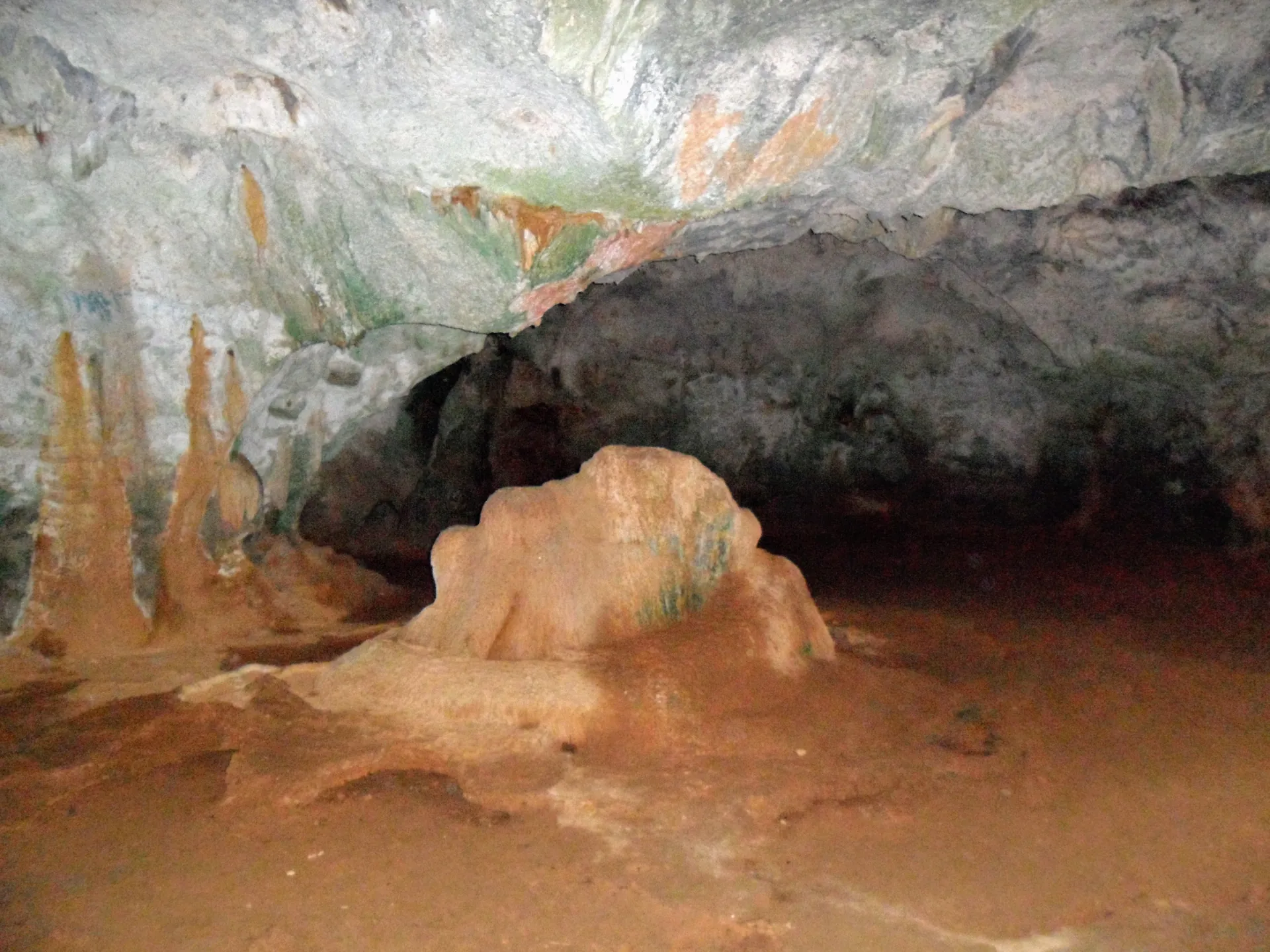
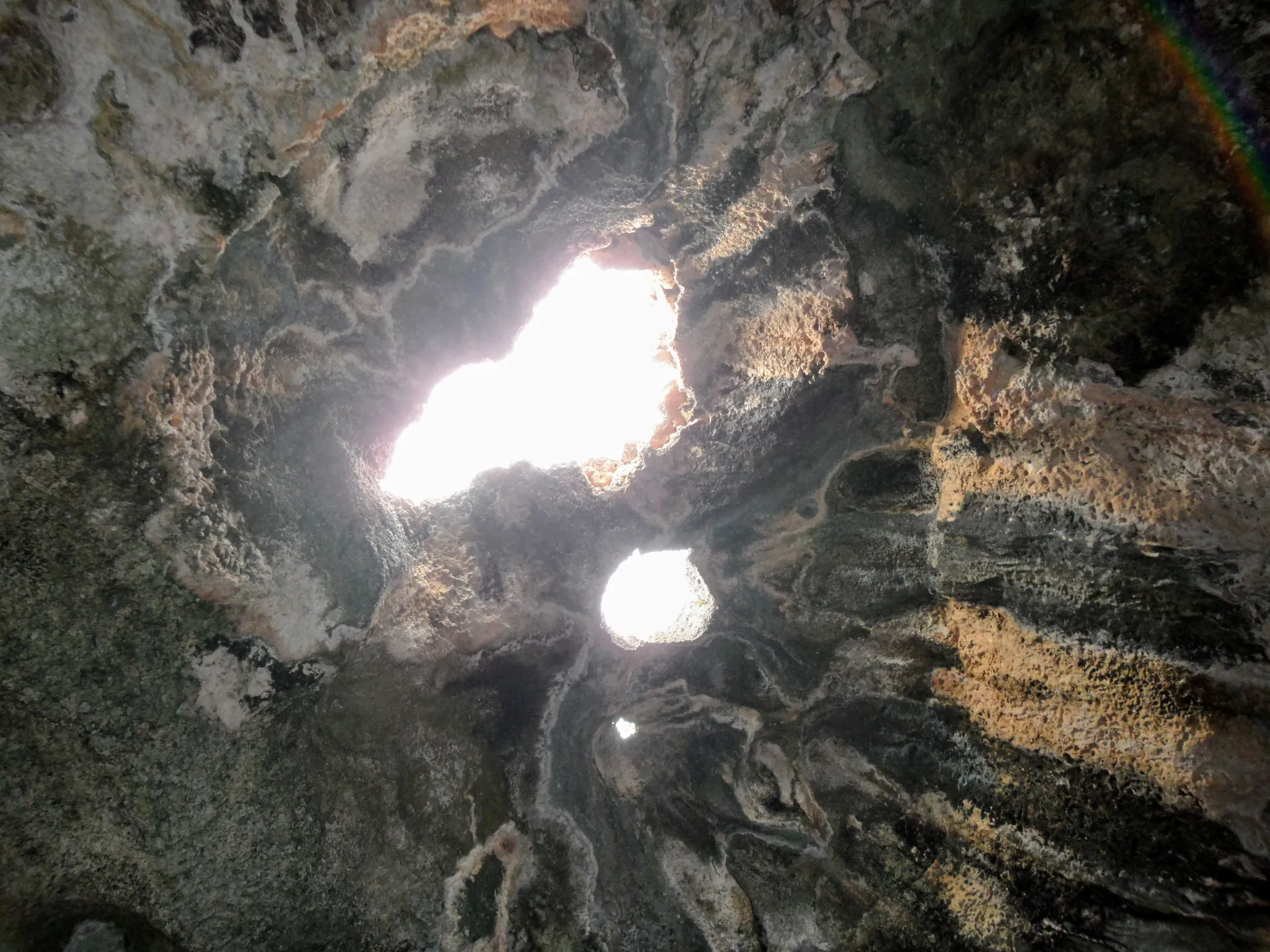
Wheelchair access is not possible beyond the parking area. The stairs are narrow, the handrail is intermittent, and the floor inside is uneven limestone. Visitors with limited mobility can see the exterior and the cliff base, and that is about the limit. If you want the full sequence inside, start with the chamber photos to decide whether the descent suits you.
Rental-Car Rules Nobody Reads
Here is the part that catches people out. Many Aruba rental contracts void insurance the moment you leave a paved surface. The gravel road inside Arikok counts as unpaved. If you clip a rock or bury a wheel in a washboard rut, you are looking at a repair bill and a very awkward conversation at the return desk.
- Check the clause. Ask the agent to point to the unpaved-road language, and get written confirmation if the answer is vague.
- Compact cars will survive, but barely. The road is graded and a small hatchback can manage it in dry conditions. Wet weather changes that calculation.
- 4×4 is overkill for Guadirikiri alone, unless you plan to continue to the Natural Pool (Conchi), which genuinely requires high clearance and low range.
- Local operators differ. Some Aruba-based companies are more relaxed about Arikok than the big international brands. This is worth asking about when you book, not after.
- Fuel up before you leave town. There are no pumps near the park, and running dry on the Santa Cruz road is a memorable way to miss your dinner reservation.
Some travellers ignore all of this and drive their economy rental to the cave anyway without incident. That is a gamble, not a plan.
Parking and the Final Approach
The Guadirikiri car park is small, unpaved, and unmarked in any elaborate way: a clearing, a low sign, space for maybe a dozen vehicles. Arrive after 10:30 AM on a busy day and you may wait for a spot. Arrive before 9:30 AM and you will park with room to spare.
From there, a flat path leads toward the cliff base, signed with a short trail marker, and then the staircase descends into Chamber 1. Handrails are present in sections and absent in others. The stone steps are worn smooth in the middle, which is what most rental contracts have a problem with (no, that is not the clause; the gravel road is). Wear closed-toe shoes with grip and take a torch or use your phone light once you are inside, because the chambers go proper dark away from the roof openings.
Taxis, Fixed Rates, and Private Transfers
Aruba’s taxi system runs on published zone fares, set by the government and enforced at the airport and hotel stands. A one-way trip from Palm Beach to the San Fuego gate falls into a mid-to-upper zone band, and you should expect to pay in cash unless the driver has a card reader. Rates change periodically, so confirm with your driver before you set off and check the Aruba Taxi Drivers Association for current published tariffs.
The catch is the return leg. There is no taxi rank at Guadirikiri, and phone signal inside Arikok is unreliable. Arrange with your driver to wait, or to return at a fixed time, and expect to pay for the waiting period. A private transfer booked through your hotel concierge usually costs more but removes all the uncertainty, particularly if you are travelling with children or anyone who cannot walk far.
Guided Tours That Include Transport
This is the option I recommend to anyone staying on the hotel strip without a car. A jeep safari with hotel pickup covers the park entry fee, the gravel road, the parking, and the narration, and it typically folds Guadirikiri into a wider Arikok loop that takes in Fontein Cave, the dunes, and often the Natural Pool. The National Park Arikok Jeep Safari Adventure is a four-hour morning run with pickup, and it skips the entire rental-car question.
If you would rather drive part of the way yourself but want a guide for the cave sections, an island jeep tour pairing the caves with Baby Beach works well from the southeast. Either way, booking means you are inside the park gates with a driver who knows the turnoff, and back at your hotel before the afternoon heat bites. Broader booking options sit on the tickets and tours page.
The trade-off is obvious: you go at the group’s pace, not your own, and you cannot sit in Chamber 1 for forty minutes waiting for the light to shift. If photography is the reason you came, self-drive wins. If simply arriving without stress is the goal, the tour wins.
Public Bus: What’s Possible and What Isn’t
Arubus runs reliable, cheap services from Oranjestad to Santa Cruz and onward to San Nicolas, and you can check routes and timetables at Arubus. What Arubus does not do is enter Arikok National Park. The nearest stops leave you several kilometres from the gate on a road with no pavement, no shade, and no footpath.
So the honest answer: public bus to Guadirikiri is not practical solo. You would be walking a long, exposed stretch of desert road in serious heat with no safe shoulder. A bus as far as Santa Cruz, combined with a pre-arranged taxi from there, is technically possible and rarely worth the hassle. Take the car, the taxi, or the tour.
Boat and Cruise-Port Reality
There is no water access to Guadirikiri. The cave sits inland, roughly 1.5 km from the coast, in the middle of a limestone landscape with no jetty, no beach landing, and no boat service. Any tour advertising a “cave boat trip” in Aruba is talking about something else entirely, usually a sunset sail or the mangrove tunnels near Mangel Halto. Do not book expecting Guadirikiri by sea.
If you are arriving by cruise ship, the timings matter more than the route. Tender times to shore, the 35 to 45 minute drive each way, and the 4 PM gate closure mean your total window is tight. A ship-sponsored or pre-booked tour with guaranteed return is the safe play. DIY by rental car on a port day is a gamble I would not take with a departure whistle in the balance.
Accessibility, the Cave-Pool Closure, and Final Logistics
To answer the question people keep asking: yes, you can drive to Quadirikiri Cave, and the cave itself is one of several Aruba caves reachable by road inside Arikok. What you cannot do is swim in the second chamber. The pool is closed to visitors, and the closure has nothing to do with renovation or seasonal maintenance. It is a permanent decision by the park authority, and there is no secret entrance or ranger-granted exception. The Arikok packing and safety guide covers the rest of the practical kit.
- Water: at least one litre per person. The walk back up the stairs in midday heat is the hardest part of the visit.
- Footwear: closed-toe shoes with grip. The steps are uneven and worn.
- Offline maps: download the Arikok area before you leave. Signal dies inside the park.
- Fuel and snacks: fill the tank and bring food. Nothing is sold inside the park boundaries.
- Shade and sun protection: a hat, high-factor sunscreen, and a light long-sleeve layer for the walk to the entrance.
- Timing: aim to be at the gate between 8 AM and 9 AM. Later starts mean heat, crowds, and a tighter margin against the 4 PM closure.
One more thing for photographers: the light shafts through the collapsed roof are strongest in the morning, and they fade through midday. If you are chasing the beam of sun that lands on the cave floor, read the best time to visit guide before you set an alarm. And if you want to know how the limestone got honeycombed in the first place, the geology and history page is where that story lives.
Skip the driving, the parking scramble, and the rental-contract gamble. A transport-inclusive tour covers park fees, hotel pickup, and a driver who knows exactly which turnoff leads to Guadirikiri.