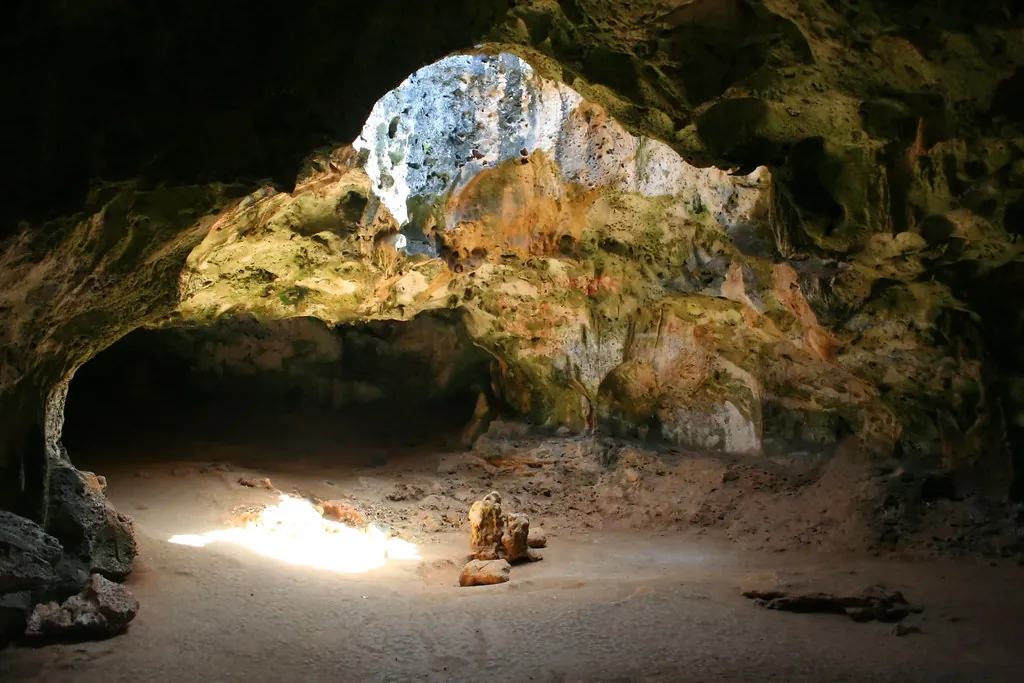
The best time to visit Guadirikiri Cave depends on what you want from the cave: arrive in the morning for cooler conditions and a better chance of a quieter visit, or aim for late morning around midday if your priority is the sunlight dropping through the limestone roof. The famous beams are real, but their exact position and strength change with the date, sun angle and cloud cover, so I would never promise a magic 10:17 am slot. Guadirikiri Cave, also spelled Quadirikiri, is open during Arikok National Park’s published daytime access period of 8:00 am to 4:00 pm.
The Short Answer: When to Go
For most travellers, early morning is the strongest all-round choice for Guadirikiri Cave: the surrounding Arikok landscape has had less time to bake, you have more breathing room before the day’s visitors accumulate, and you still have the full park access window ahead of you. The published park access period is 8:00 am to 4:00 pm, so an early arrival is a practical recommendation rather than an official requirement.
Go early for comfort. Go nearer midday if the shafts of sunlight are the photograph you came for.
Aruba Tourism Authority guidance places December through April in the island’s peak season, while September through November is the lower season, with more sporadic rain and a higher heat index. That makes season and time of day separate decisions: a January morning can be busy because Aruba is busy, while a September morning can feel wonderfully calm but warmer and more weather-variable.
Morning vs Afternoon at Guadirikiri Cave
Morning
- Usually the more comfortable choice for walking around exposed Arikok terrain.
- Gives you a head start before heat builds across the park.
- Works well if you want to linger over the cave rather than squeeze it between other stops.
- Useful for photographers who want to watch the interior change as daylight moves across the roof openings.
For a slow visit, I would aim to be at the park early, then let the cave become one stop in a longer Arikok morning rather than the sole reason to race through the gates.
Afternoon
- Still falls within the published 8:00 am to 4:00 pm park access period.
- Can suit road trips that begin elsewhere in Arikok.
- May feel hotter around the approach and exposed limestone.
- Can work well when your itinerary is built around changing daylight rather than cooler temperatures.
Afternoon visits are perfectly workable, but leave a proper margin before the published 4:00 pm park closing time. A cave visit is a poor place to discover that your island driving plan has run late.
Best-Time Planning Table
| Time / Season | What to Expect | Best For | Planning Note |
|---|---|---|---|
| Early morning | Cooler outside conditions, quieter atmosphere | Comfort, photography, slower visits | Strong all-round choice before heat peaks |
| Late morning to midday | Strong daylight around roof openings, increasing heat | Light-beam photography | Sun position shifts seasonally; arrive before 13:00 |
| Afternoon | Still within 8:00 am–4:00 pm park access window | Arikok road-trip itineraries | Leave sufficient daylight before 4:00 pm gate closure |
| December to April | Peak visitor season, generally drier conditions | Predictable outdoor weather | Book rental 4×4 or guided tour in advance |
| September to November | Lower season, chance of sporadic rain showers | Lower crowd levels | Check road passability after rain |
When the Sunlight Hits the Cave
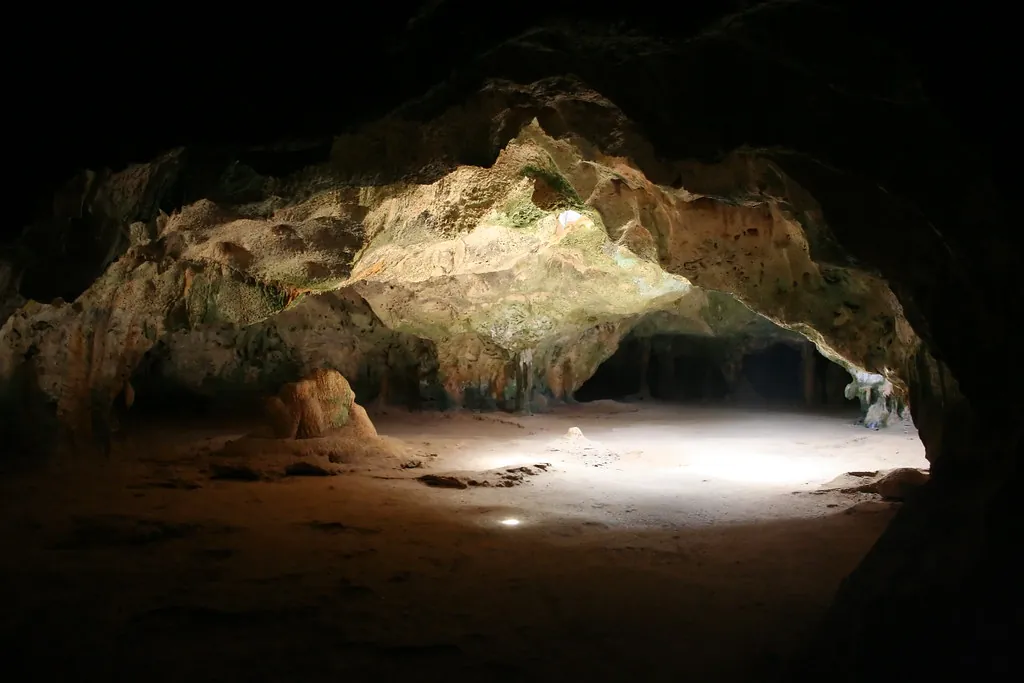
Guadirikiri’s appeal comes from the roof itself. The cave has chambers where daylight pours through openings in the limestone above, turning parts of the interior from proper dark into something closer to a natural cathedral. The effect can be dramatic because the surrounding rock remains much darker than the opening overhead.
The sensible photography advice is to watch the light rather than chase an internet timetable. Sun angle changes through the year, clouds can soften or erase a beam, and the apparent position of the light inside the chamber moves as the sun travels. A photograph taken on Tuesday can look quite different from one taken at the same clock time months later.
For low-light photographs, expose for the bright roof opening and let some of the darker limestone disappear. A phone’s night mode can lift the shadows, but a flash can flatten the atmosphere and is particularly unwelcome around bats.
Heat, Rain and the Cave Microclimate
Aruba is warm throughout the year, and the cave does not magically cancel the island’s heat. The enclosed chambers can feel darker, humid and still, while the walk around Arikok remains exposed to sun and trade winds. That contrast is easy to underestimate when you are standing at the entrance with a camera in one hand and a bottle of water you have already forgotten to drink from.
- December to April: Aruba’s peak travel season overlaps with generally drier conditions, making this a popular period for outdoor sightseeing.
- May to August: Warm conditions continue, with summer travel often bringing fewer visitors than the winter peak.
- September to November: Lower visitor volumes can make the park feel calmer, while sporadic rain and a higher heat index require more flexibility.
- October to December: Aruba’s tourism guidance identifies this period as its rainier season, although showers are commonly intermittent rather than an all-day washout.
Rain is not automatically bad news for a cave visit, but it can change the experience around it. Wet limestone can become more awkward underfoot, clouds can soften the sunlight that photographers are hoping to catch, and a sudden shower can make an exposed Arikok stop less pleasant. Pack water regardless of the forecast. The Caribbean sun is remarkably good at making sensible people forget sensible things.
Crowds, Cruise Days and Tour Timing
Crowd timing at Guadirikiri Cave is best treated as practical inference rather than a fixed schedule. Aruba’s December-to-April peak season naturally puts more people on the island, while September-to-November is the lower season. Cruise arrivals can also change how busy popular attractions feel on a particular day, but there is no reliable cave timetable that lets you predict an empty chamber from a cruise calendar alone.
If you are driving yourself
- Start early when comfort and a slower visit matter most.
- Build the cave into a wider Arikok route rather than treating it as an isolated stop.
- Leave a time buffer before the published 4:00 pm park closing.
If you are joining a tour
- Departure times are set by the individual operator.
- Morning jeep excursions can suit travellers who want Guadirikiri before the strongest heat.
- Combo excursions may put the cave later in the itinerary, so check the stated departure and duration before booking.
For current tour choices, use the site’s Tickets & Tours page rather than assuming every advertised excursion visits Guadirikiri at the same hour. The same principle applies to Transport: a transfer can be convenient, but your actual cave arrival time depends on the operator’s route and pickup pattern.
When the Bats Are Most Relevant
Bats use the darker sections of Guadirikiri Cave, and Aruba’s tourism guidance describes hundreds of harmless bats roosting in those areas. There is no dependable clock time that guarantees greater bat activity, so visiting at dawn or dusk specifically for bats is not something I would build an itinerary around.
Keep the darker chambers calm. Use a low light when you need one, avoid shining it directly at wildlife, and skip the flash. The bats live there; we are the ones dropping in for photographs.
The site’s Visitor Rules & Guidelines page is the place to check before you go, particularly if wildlife photography is part of your plan. Stay on the permitted route, avoid touching cave formations, follow ranger instructions and leave the cave exactly as you found it.
Season-by-Season Guide
There is no single month that makes Guadirikiri Cave suddenly worthwhile. The useful choice is between weather predictability, visitor volume and the kind of day you want in Arikok.
- December-April: This is the peak visitor period and a strong choice when dry-season outdoor conditions matter most. Book popular tours and rental cars with more lead time, particularly around holiday periods.
- May-August: These months remain warm and can be quieter than the winter peak. The extra heat makes an early cave visit attractive, especially if you plan to walk elsewhere in the park.
- September-November: This is the lower season, so fewer visitors can be a real advantage. The trade-off is a higher heat index and more variable rainfall, particularly as the wetter part of the year approaches.
For photographers, season is only half the equation. A clear sky can make a roof beam sharply defined, while broken cloud can create softer light and a completely different mood. That unpredictability is part of the fun, provided your itinerary has enough room for it.
A Practical Day Plan
An early Guadirikiri visit works beautifully as part of a half-day Arikok circuit. Give yourself time to reach the cave without hurrying, explore the chambers respectfully, then continue into the park while the morning is still doing some of the heavy lifting against the heat.
- Arrive at Arikok National Park early enough that the cave is not the last item on a rushed itinerary.
- Visit Guadirikiri Cave while temperatures around the exposed terrain are still comparatively manageable.
- Spend time looking at the roof openings and darker chambers rather than taking one photograph and leaving.
- Continue towards other Arikok sights, checking current access conditions before setting out.
- Carry more water than you think you need, particularly in the warmer months.
- Use the site’s Arikok National Park & Nearby Caves guide to shape the rest of the route.
Travellers who want someone else to handle the driving can compare the current options on Tickets & Tours. A morning Jeep excursion can fit the cave nicely, while longer island safaris may combine it with other Arikok sights and natural pools.
Confirmed Facts vs Practical Inference
Confirmed
- Arikok National Park’s published daytime access is 8:00 am to 4:00 pm.
- Guadirikiri is known for chambers illuminated by sunlight entering through holes in the roof.
- The darker sections are used by bats.
- Aruba Tourism Authority identifies December-April as peak season and September-November as the lower season.
- Aruba remains warm year-round, with rainfall varying by season.
Practical inference
- Early arrival is a sensible choice when reducing exposure to daytime heat matters.
- Morning may feel quieter, but no fixed hour guarantees an empty cave.
- Late morning or midday can be attractive for roof-light photography, but the beam position changes with date and weather.
- September-November can suit travellers who value lower visitor volumes, provided they accept greater weather and heat variation.
- A tour’s cave arrival time depends on the operator, route and departure window.
Guadirikiri Cave and Aruba Nature FAQ
Are there natural swimming holes near Guadirikiri Cave?
Yes, Aruba has natural swimming spots, but Guadirikiri Cave itself is a cave visit rather than a swimming-hole attraction, so do not plan to swim inside the cave. The Natural Pool in Arikok National Park is a separate coastal feature, and access conditions can change, so check the park’s current guidance before making it part of the same day.Are there jungles in Aruba?
No, Aruba does not have tropical jungle in the conventional rainforest sense; Guadirikiri sits within the dry, rocky landscape of Arikok National Park, where cacti, thorny vegetation and exposed limestone are much more characteristic. The cave can feel cool and enclosed compared with the surrounding terrain, which sometimes makes photographs look more jungle-like than the landscape outside actually is.Are there crocodiles in Aruba?
No, wild crocodiles are not native to Aruba, so crocodile encounters are not a concern at Guadirikiri Cave or elsewhere in Arikok National Park. The cave’s wildlife interest is much more closely associated with bats and other small cave-adapted animals, and visitors should give all wildlife space.Does Aruba have waterfalls?
No, Aruba has no permanent natural waterfalls comparable with wetter Caribbean islands, because its dry climate and limited rainfall do not sustain year-round river systems; Guadirikiri is instead a limestone cave whose dramatic waterless architecture comes from its chambers and roof openings. After rain, temporary runoff can appear in parts of the island, but that is very different from a permanent waterfall.What time of day is best for Guadirikiri Cave?
Early morning is the best general choice for cooler conditions and a slower visit, while late morning to around midday can be attractive for sunlight-beam photography; the cave is accessible during Arikok National Park’s published 8:00 am to 4:00 pm daytime hours. The famous light shafts do not appear at one guaranteed clock time because sun angle and cloud cover change throughout the year.Can you see bats at Guadirikiri Cave?
Yes, bats can be seen in the darker sections of Guadirikiri Cave, where Aruba’s tourism guidance describes hundreds of harmless bats roosting. Their activity is not tied to a guaranteed visitor hour, so treat them as wildlife you may encounter rather than an attraction with a scheduled performance.Is Guadirikiri Cave open all day?
No, Guadirikiri Cave is accessible during Arikok National Park’s published daytime period of 8:00 am to 4:00 pm, so plan to arrive with enough time before the 4:00 pm closing. Access can also be affected by park conditions or local instructions, making current park guidance more useful than an old tour listing.Official Sources and Further Reading
- Aruba Tourism Authority: Quadirikiri Cave, for the cave’s chambers, roof openings, bats and general visitor context.
- Aruba Tourism Authority: Aruba Caves, for Guadirikiri, Fontein and daytime cave access information.
- Aruba Tourism Authority: Best Time to Visit Aruba, for seasonal crowd and weather guidance.
- Aruba Tourism Authority: Weather and Climate, for monthly temperatures, rainfall patterns and Aruba’s dry and rainy periods.
- Aruba Tourism Authority: Arikok National Park, for wider park planning and current visitor information.
Related Guides
- Guadirikiri Cave Photos & Chambers: see how the roof openings, darker chambers and changing daylight affect photography.
- Visitor Rules & Guidelines: practical advice for bats, formations, lighting, footwear and responsible cave visits.
- How to Get to Guadirikiri Cave: driving, parking, park access and transport planning.
- Arikok National Park & Nearby Caves: plan Guadirikiri alongside Fontein Cave and other park stops.
- Tickets & Tours: compare tour formats and current departure options.
- Fontein Cave vs Guadirikiri: compare the two caves by atmosphere, access and photography.
- Arikok National Park Packing List & Desert Safety: pack for the heat, rocky terrain and a longer park day.