Arikok National Park Packing List & Desert Safety
Most people pack for Aruba once, then pack for Arikok by accident. Flip-flops, a beach towel, one lukewarm bottle of water from the hotel fridge, and off they drive into a stretch of desert that sees maybe 400 mm of rain in a year, most of it crammed into a three-month window. I have walked these tracks since 2016, first with a geology hammer and a terrible sun hat, now with a better hat and a lot more water, and the single most common mistake I watch at the San Fuego gate is footwear. The park is honeycombed with limestone, lava rock, and caves, and none of it is kind to open toes.
Guadirikiri is one stop on the loop, not the whole day. This page covers the territory between the gate and the cave: what to carry, what to leave in the car, and how to read the early signs that the heat is winning. For the cave itself, the deep detail lives on our Visitor Rules page and in the chambers photo guide. For timings and light beams, head to Best Time to Visit.
The Landscape Sets the Stakes
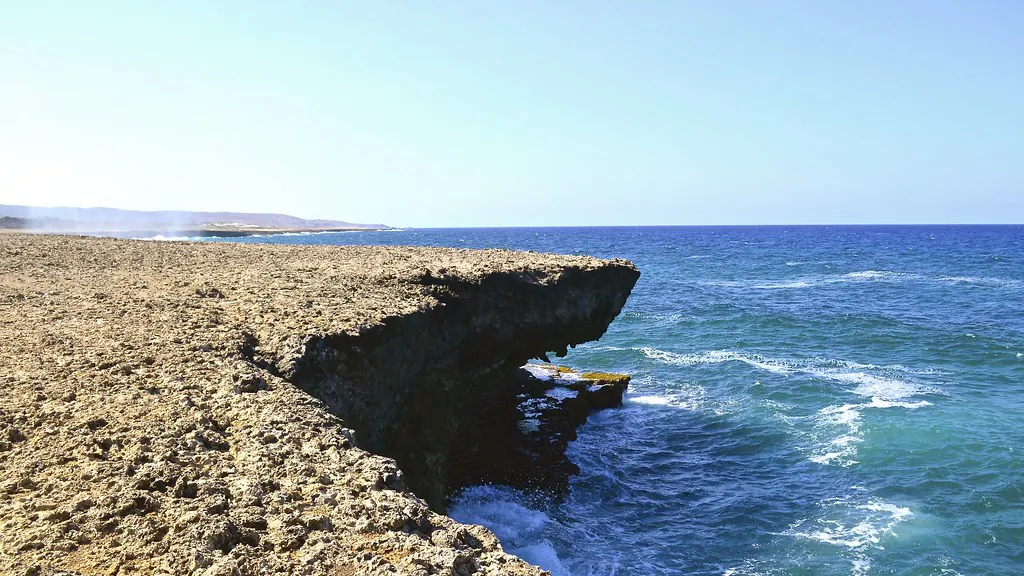
Arikok protects roughly a fifth of Aruba’s landmass, somewhere near 34 square kilometres by most counts (area figures wobble depending on who is measuring, so treat that as approximate). Underfoot you get a volcanic core capped with limestone, which means sharp lava scree in one place and soft, crumbling rock in another. Divi-divi trees lean the same direction all day because the trade winds never quit. Aloe, candle cactus, and scrub cover everything else, and shade is a rumour. Average daytime temperatures sit between 28°C and 32°C for most of the year, with a UV index that hits 11 and above on a regular Tuesday.
A beach packing list fails here because beaches forgive you. Sand is soft, the sea is right there, and the hotel bar is nine minutes away. Inland, a wrong shoe turns a twenty-minute walk into a limp back to the car, and a forgotten water bottle becomes a headache you will feel for three hours. Nothing dramatic, just friction. Friction is what ruins a good day out.
Park Entry, Hours, and Paying the Fee
The main gateway is the San Fuego Visitor Center, sometimes written San Fuegos in older material, and it sits inland near Santa Cruz on the road toward the caves. Hours and fees shift with the season and with park management decisions, so I am flagging every number below. Check the Aruba National Park Foundation [Official Website] the week you travel, because this is exactly the sort of figure that quietly changes while nobody updates the blogs.
| Item | Working detail | Status |
|---|---|---|
| Main gate | San Fuego Visitor Center, Santa Cruz | Spelling varies; confirm on the official site |
| Opening hours | Roughly 08:00 to 16:00 daily, last entry often 15:30 | Flagged: confirm seasonal changes |
| Entry fee | Around Afl 20 / ~$11 USD per adult; children under 12 typically free | Flagged: confirm at the gate |
| Payment | Card has been accepted at the visitor center in recent seasons | Carry cash in florins and dollars anyway |
| Cave parking | Free lots at Guadirikiri and Fontein | Stable |
| Common closures | Natural Pool access road and the cave pool | Check on the day you go |
Budget ten minutes at the desk for the pass and the map, then another five to fill every bottle you own at the restroom taps. That stop is your last reliable water before the interior.
Water: The One Item You Cannot Underestimate
Carry three litres per person for a half day and four for a full loop of the park, and that is before you count anyone under sixteen or anyone who runs warm. The trade winds are the trick. They evaporate sweat the second it appears, so you finish a two-hour walk with dry skin and a dry mouth and no memory of having sweated at all. I have watched grown adults in good shape sit down hard on the Fontein path because they drank coffee at 7am and nothing since.
- Three to four litres of plain water per person, minimum
- One electrolyte sachet or a bottle of sports drink per person
- A small insulated bottle for the car, because a hot car turns water into tea by noon
- Refill at San Fuego before you head inland; there is no tap at Guadirikiri
Sun Protection That Survives the Trade Winds
Pick a mineral or reef-safe sunscreen, partly because local shops stock it and partly because it stays put when you sweat. Reapply every two hours, and again after you have been inside a cave, since cave air feels cool and fools you into thinking you are out of the sun. You are not. The limestone around Guadirikiri bounces light straight back up at your chin and forearms, which is why people leave with burned necks and unburned legs.
Wear It
- Wide-brim hat with a chin strap or a cap that grips
- Light long-sleeved shirt, quick-dry, pale colour
- UV sunglasses, ideally polarised for glare off the rock
- SPF lip balm, because lip burn is miserable
Leave It in the Car
- Denim, which holds sweat and sand like a sponge
- Heavy dark cotton that turns into a hot compress
- Anything you would cry about staining with iron oxide dust
- Loose scarves that turn into kites in a 25-knot gust
The trade winds are the con. They cool your skin while the sun quietly cooks it.
Footwear: Closed-Toe or Stay in the Car
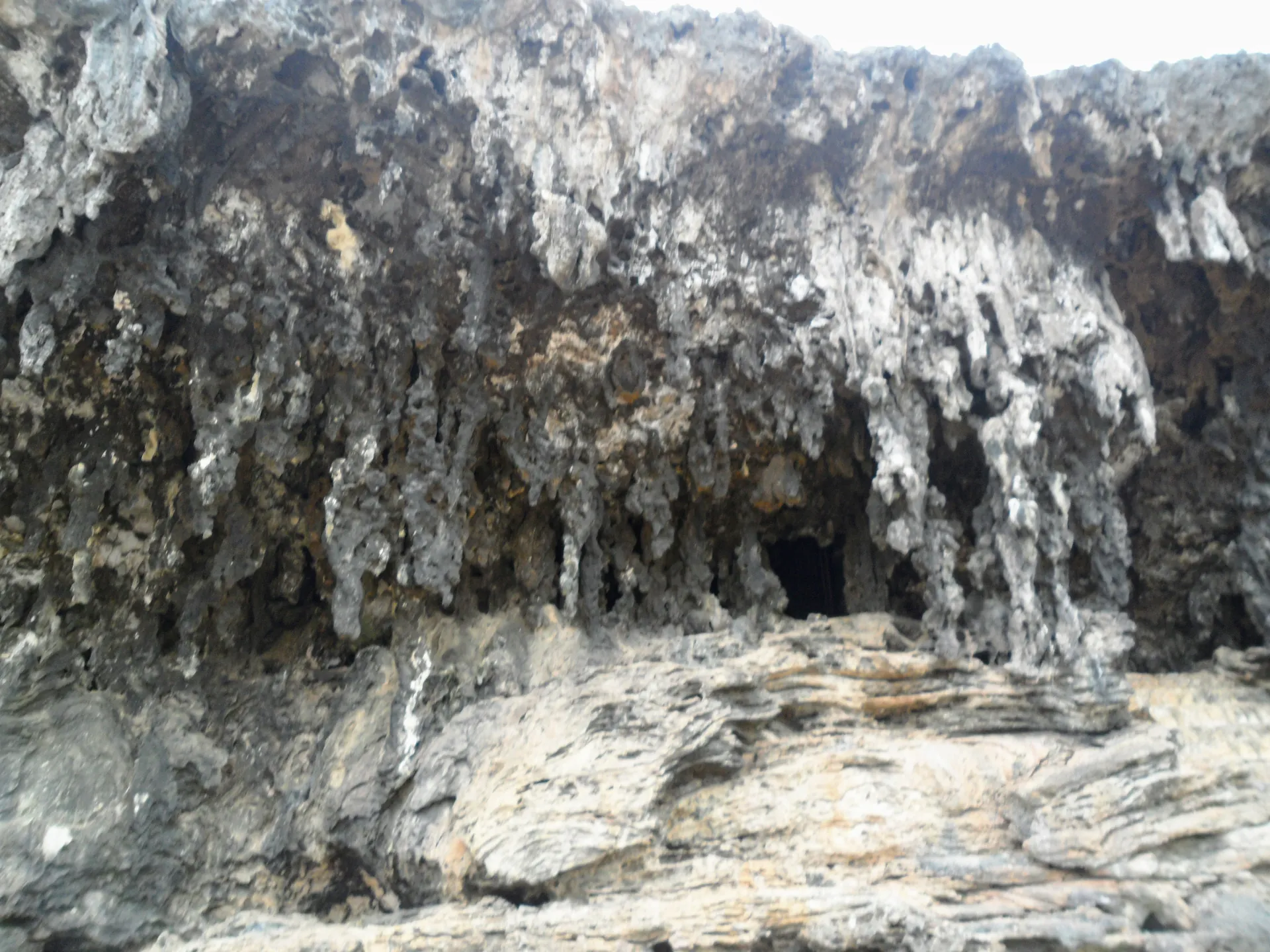
Closed-toe shoes with real grip, and I mean real grip rather than the flat rubber sole of a fashion trainer. Lava rock has edges like broken glass. Loose scree rolls under a thin sole. Cactus spines hook into mesh and stay there, and the small ones are the worst because you find them three days later in a sock. Inside Guadirikiri the floor is uneven, dusty, and slick in patches where years of guano and condensation have made a fine paste.
Trail runners work. Hiking sandals with a closed toe and a heel strap work at a push. Flip-flops do not work anywhere in the park, and I say that as someone who once carried a stranger’s sandal back down the stairs at Fontein while she hobbled behind me.
The Daypack Checklist
Pack light, pack for one person, then double the water and halve the rest. Everything on this list fits in a 20-litre daypack with room for a camera.
| Category | What goes in |
|---|---|
| Hydration | 3 to 4 litres of water, one electrolyte sachet |
| Food | Salty snacks, nuts, a banana, nothing that melts |
| First aid | Plasters, antiseptic wipes, tweezers for spines, blister pads |
| Light | Headlamp or a phone torch, plus a spare power bank |
| Comfort | Tissues, a small towel, a dry shirt for the drive back |
| Money | Cash in florins and a few US dollars, small notes |
| Navigation | Offline map downloaded before you leave the hotel wifi |
Rental Car Limits and the Insurance Trap
Most rental agreements in Aruba void your coverage the moment you take the car onto an unpaved road, and Arikok is largely unpaved. Read the sheet they hand you at the desk, not the glossy brochure, because the exclusion is usually in small print under “off-road use”. A compact sedan can handle the paved stretch to the San Fuego gate and the short spur to the caves. It cannot handle the coastal tracks, and the Natural Pool access road demands a proper 4×4 with high clearance and low-range gearing.
If that sounds like a lot of admin for a holiday, this is where the guided option earns its money. A National Park Arikok Jeep Safari Adventure runs the same bush tracks in someone else’s vehicle with someone else’s suspension, and somebody else handles the ranger paperwork. Full driving detail and alternatives live on our Transport hub.
Snap a photo of the car and the fuel gauge before you leave the rental lot. Arguments at 6pm about a scratch cost more than the extra insurance.
Navigation and Phone Signal Gaps
Download an offline Quadirikiri cave Aruba map before you drive in. Signal is patchy along the northern coast road, drops completely in the dip behind Fontein, and dies inside the chambers themselves, which matters if you have split from your group and agreed to meet at the car. There’s a few stretches where your phone shows two bars and moves nothing at all, which is worse than no bars, because you trust it.
- Screenshot your route, your booking references, and your gate hours
- Mark the car park on the map pin, not just the cave entrance
- Tell someone at your hotel or apartment where you are going and when you expect to be back
- Carry the park office number saved in your contacts, not just in a browser tab
Heat Exhaustion and Dehydration: Reading the Signs
Early warning shows up as a dull headache, an odd metallic taste, and a sudden dislike of the sun. Then come dizziness, nausea, cramping calves, and goosebumps in the middle of a 31°C afternoon, which is your body’s last clear signal before things get serious. Stop, sit in whatever shade you can find, drink water with electrolytes in it, and cool your neck, wrists, and inner elbows with a wet cloth or a wet shirt.
If someone is confused, vomiting, or has stopped sweating altogether, that is heat stroke territory. Cool them hard, get them into a vehicle with the air conditioning on full, and call 911. Aruba uses 911 for police, fire, and ambulance. My honest rule after nine years here is the two-minute check: if you have to convince yourself you feel fine, turn back. The cave will still be there tomorrow morning, and the light through the roof holes is better before eleven anyway.
Wildlife and Terrain Hazards
The Aruba rattlesnake is endemic, rare, and almost never seen, but it exists and it lives in this scrub. Watch where you put your hands when you steady yourself on a rock, and never reach into a gap between stones. Cacti are the more realistic threat. The spines hook backwards, so pulling a hand away makes it worse, and tweezers in your bag suddenly look like the smartest thing you packed.
- Iguanas, goats, and whiptail lizards are harmless and common
- Bees and wasps gather around flowering cactus in the wet season
- Cliff edges along the north coast crumble; stay well back from the lip
- Abandoned mine shafts and unstable rock exist near the old workings, which is one reason to stay on marked paths
Cave Stops Within the Loop
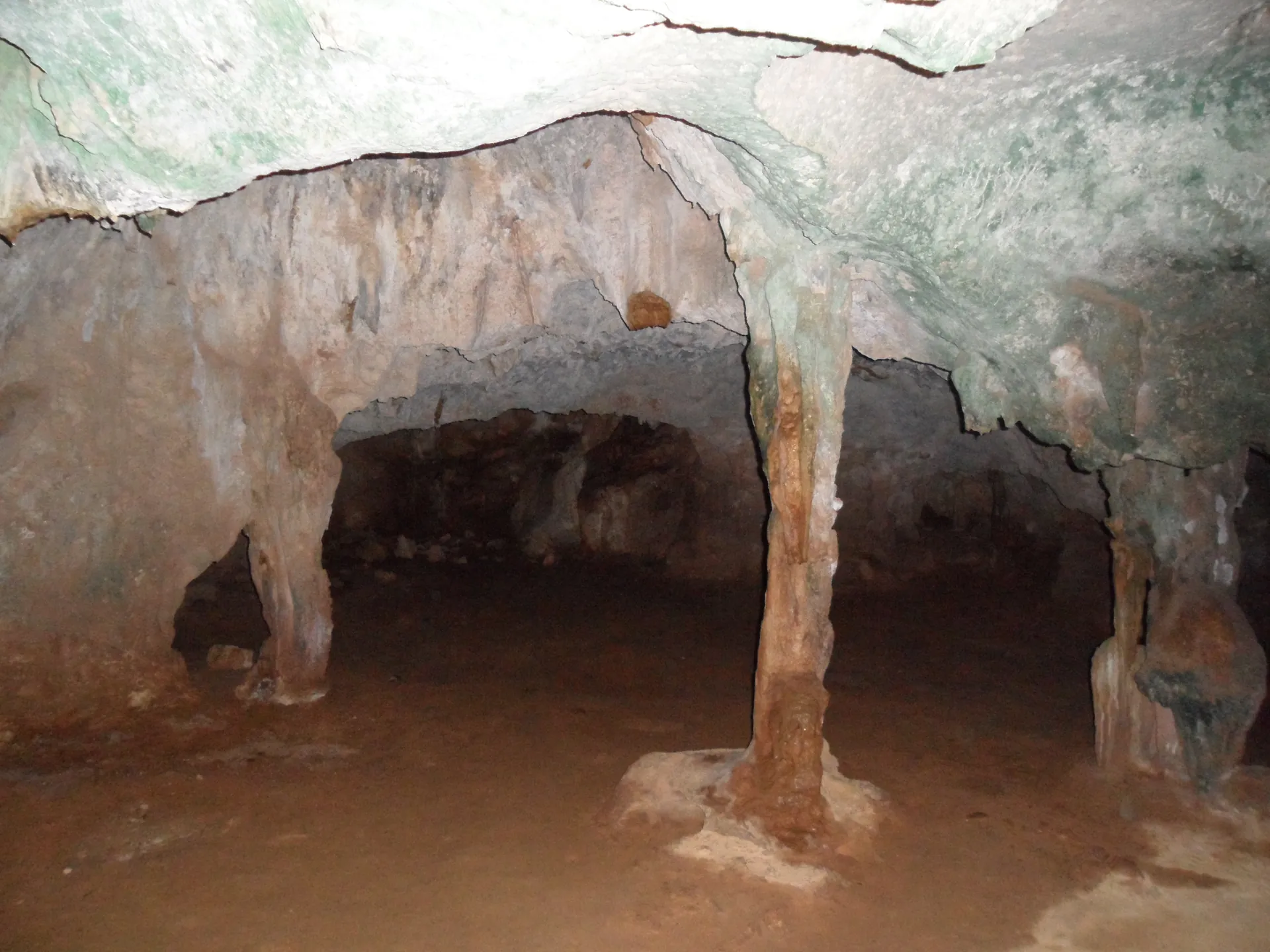
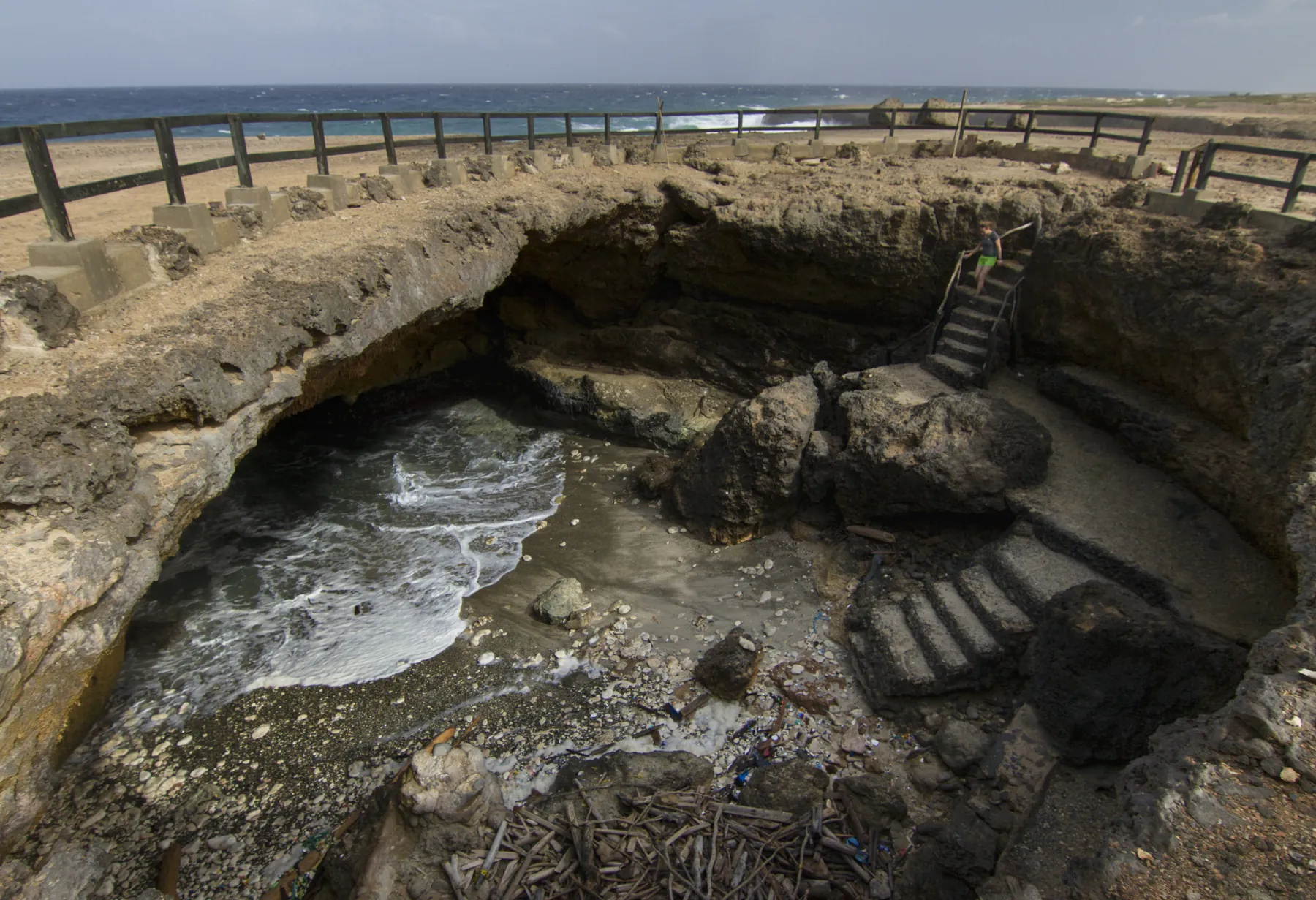
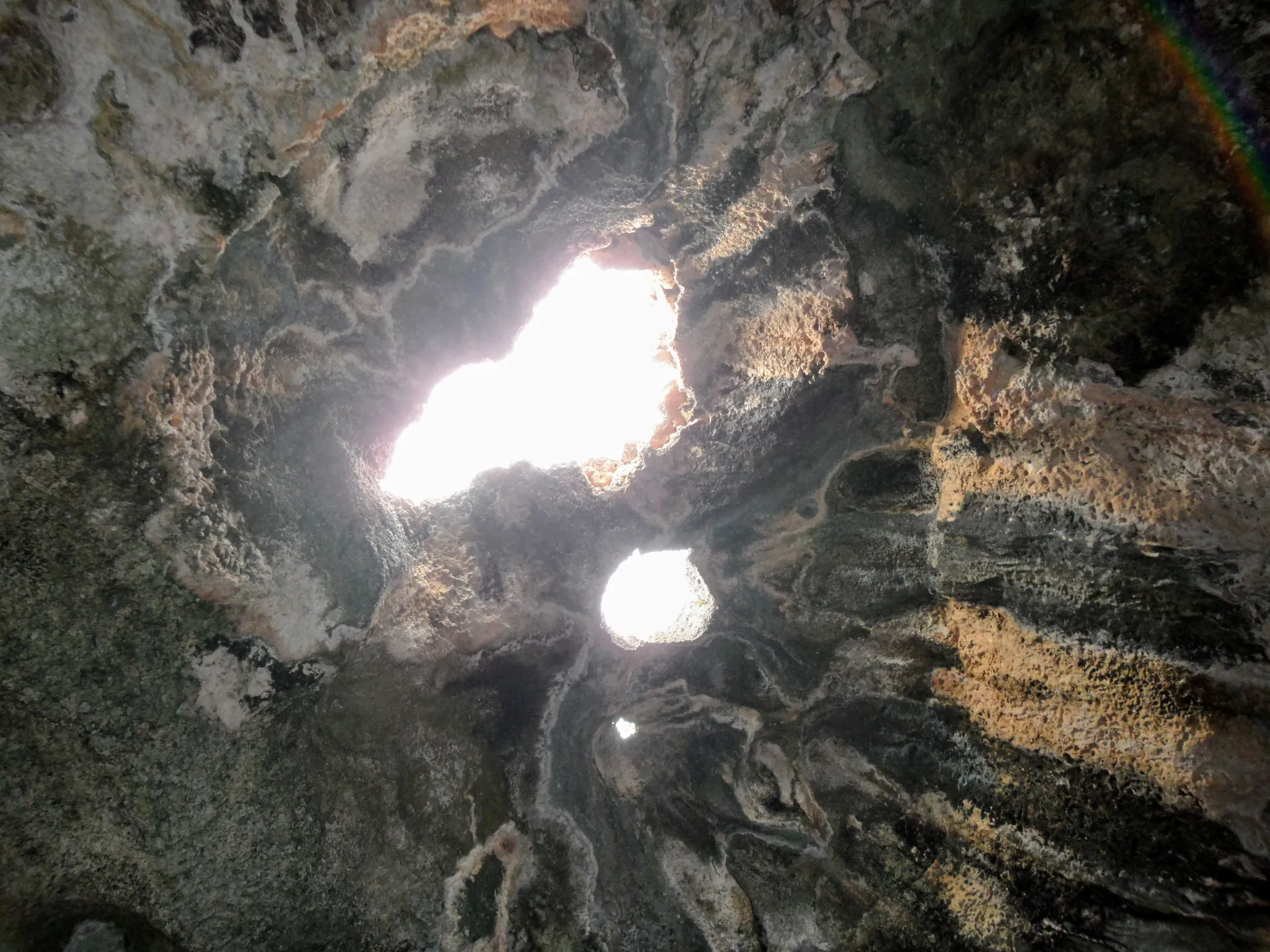
Guadirikiri is the showpiece, two chambers with collapsed roof holes that drop columns of light onto the floor, plus a bat colony in the darker reaches. Fontein sits a few minutes away and has ranger-led access and Arawak drawings on the walls. Both are stops on the same drive rather than separate trips, and the Quadirikiri cave hike from the car park is short: a few minutes of path, a few steps, then the dark.
Even on a short cave visit, bring the torch and the closed shoes. Sandals skid on the dust, and phone screens are useless past the first ten metres. Keep your voice down near the bats, keep the flash off, and never touch a formation, because the oils on your fingers end a growth process that took thousands of years. The full etiquette list sits on the Rules page, and for how Aruba cave visits compare across the park, see our Arikok hub.
Timing Your Visit Around the Heat
Be at the gate for opening, or as close to it as the coffee machine at your apartment allows. Morning gives you cooler rock, softer light, empty cave chambers, and considerably fewer people on the stairs. The middle of the day belongs to the lizards and the tour convoys. Aim to be back on the paved road by 11:30, with the air conditioning doing its work.
If you would rather hand the timing over to someone who does this daily, a Natural Pool and Indian Cave jeep safari leaves early and builds the cave stops into the route, which suits anyone travelling with kids or anyone who has already done the driving maths and decided against it. Season by season, the Best Time guide lays out light beams, cruise crowds, and the wet-season trade-offs.
Emergency Contacts, Leave-No-Trace, and Ranger Etiquette
Save 911 for police, fire, and ambulance, and save the park office number from the official park site for everything else. Weather and UV forecasts come from the Meteorological Department of Aruba, which is more useful than a generic weather app that thinks the whole island is one point. For broader travel and safety guidance, check the UK Foreign Office advice for Aruba, and for island-wide planning the Aruba Tourism Authority [Official Website] keeps current listings.
Rangers here are friendly and direct. Follow the closures, stay off the dunes, pack out every scrap including orange peel, and do not stack stones or move rocks. Collect your litter even if it is not yours, because the wind carries plastic into the cactus where nobody can reach it. Greet people with a (bon dia) as you pass and you will get one back, usually with a tip about where the light is best that morning.
Pack the water, the shoes, the torch, and the offline map. Everything else is optional. (Nos ta bai.)
Ready to sort the cave stop itself? Head to Tickets & Tours for booking options, or start with the definitive Guadirikiri guide if this is your first visit.