Visitor Rules & Guidelines for Guadirikiri Cave
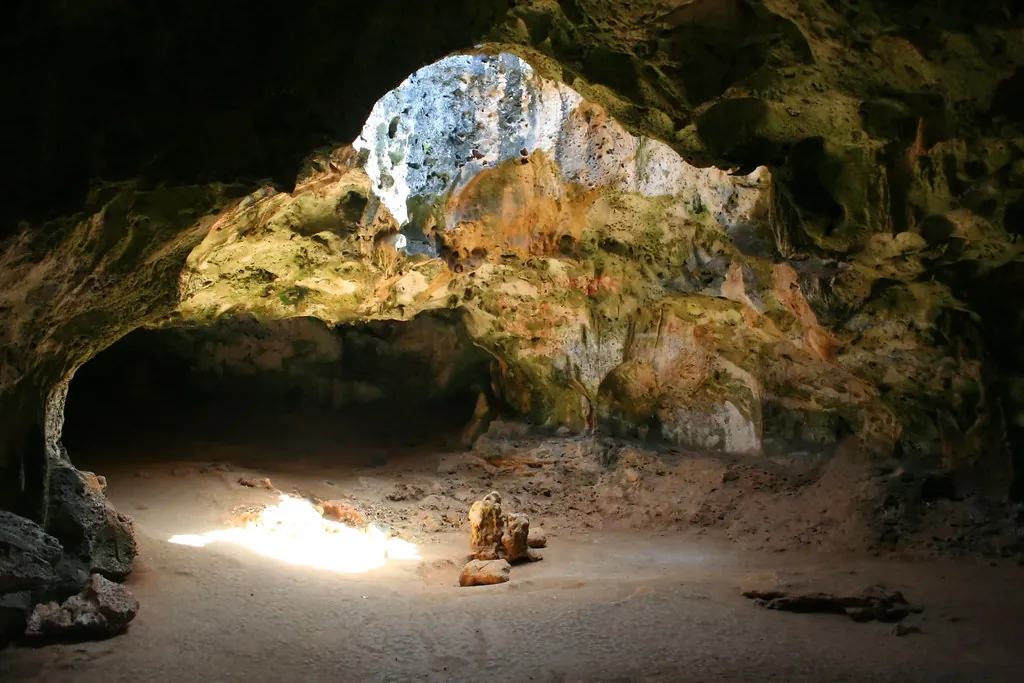
Guadirikiri Cave sits inside Arikok National Park, so the rules you follow here are park rules, not house rules invented for tourists with expensive cameras. The cave is a living limestone environment with wildlife, fragile mineral surfaces and sections that become proper dark. Aruba’s official tourism information places the cave within the national park and describes its two chambers, roof openings and bat habitat; the park itself is a protected area, so ranger instructions take precedence over anything printed on this page.
Think of this as the practical version of the signboard. Keep your feet where the path tells you to put them, keep your hands off the rock, give bats some peace, and carry enough water to deal with Aruba’s heat before you reach the shade. The official Aruba guidance also asks visitors to stay on marked trails and observe wildlife from a distance. Those habits matter throughout Arikok, not just inside the cave.
The Park’s Rules Come First
Guadirikiri Cave is part of Parke Nacional Arikok, and the park’s rangers have the final word on access, closures and visitor behaviour. Aruba’s government maintains the legal framework for the national park and its protected natural areas, while the park authority manages visitors on the ground. The Government of Aruba publishes the regulations governing Arikok access, and its environmental legislation includes protections for flora and fauna.
If a ranger closes a passage, asks you to leave a chamber or changes the route because of weather, maintenance or wildlife, follow that instruction even if another traveller says they walked through yesterday. Conditions in a cave can change, and an old photograph or travel blog is not permission to cross a barrier.
Before You Enter: The Rules That Save Trouble
Stay on the marked route
Use the established trail and internal access route rather than scrambling over loose rock to find a better photograph. Guadirikiri’s surfaces can be uneven, and the transition from bright Caribbean sun to a dim cave chamber makes depth and footing harder to judge.
The marked route also protects areas that visitors may not realise are fragile. A limestone cave can look indestructible while small changes accumulate beneath thousands of passing shoes.
Wear proper shoes
Choose closed-toe shoes with a sole that grips rock. Flip-flops, heels and smooth-soled fashion trainers belong back at the hotel. You may have only a short walk to the cave, but the ground does not become kinder because the distance is short.
A small torch is useful for darker sections, even when your phone has a bright light. Keep the beam pointed towards the ground when you need to see your footing rather than sweeping it around the ceiling.
Keep Your Hands Off the Limestone
Do not touch stalactites, stalagmites, walls, mineral deposits or other formations simply because they are within arm’s reach. Human skin carries oils and moisture that can alter delicate surfaces, while repeated rubbing can wear away small deposits that took an exceptionally long time to form.
This is especially important when the cave invites the usual cathedral comparison. The roof holes, shadows and pale limestone can create a grand interior, but the rock is geological history rather than decorative architecture. Leaning against a formation for a portrait, sitting on a ledge or steadying yourself with one hand can damage exactly the surface you came to see.
Use the handrails or stable parts of the designated route where they exist. If the only way to get a photograph requires grabbing the rock, crouching beyond the path or climbing onto a formation, skip the photograph.
Bats: Quiet Voices, No Flash
The darker parts of Guadirikiri Cave are home to bats, and visitors should treat those sections as wildlife habitat rather than a photo studio. Aruba’s tourism authority describes bats roosting in the darker portions of the cave, and the sensible approach is simple: keep your distance, keep your voice down and let the animals remain undisturbed.
- Do not use flash photography on bats.
- Do not shine a torch directly at a roosting bat for an extended period.
- Do not whistle, shout, clap or deliberately make noises to provoke movement.
- Do not chase a bat that flies through the chamber.
- Keep to the designated route beneath or beside the roosting areas.
- Follow any additional instructions given by a park ranger.
If a bat flies close to you, the best response is wonderfully boring: stand still, keep your hands to yourself and let it pass. There is no need to duck wildly, wave a hat or illuminate the ceiling like a stadium. The animal is trying to get somewhere, and that somewhere is not you.
Photography Without Disturbing the Cave
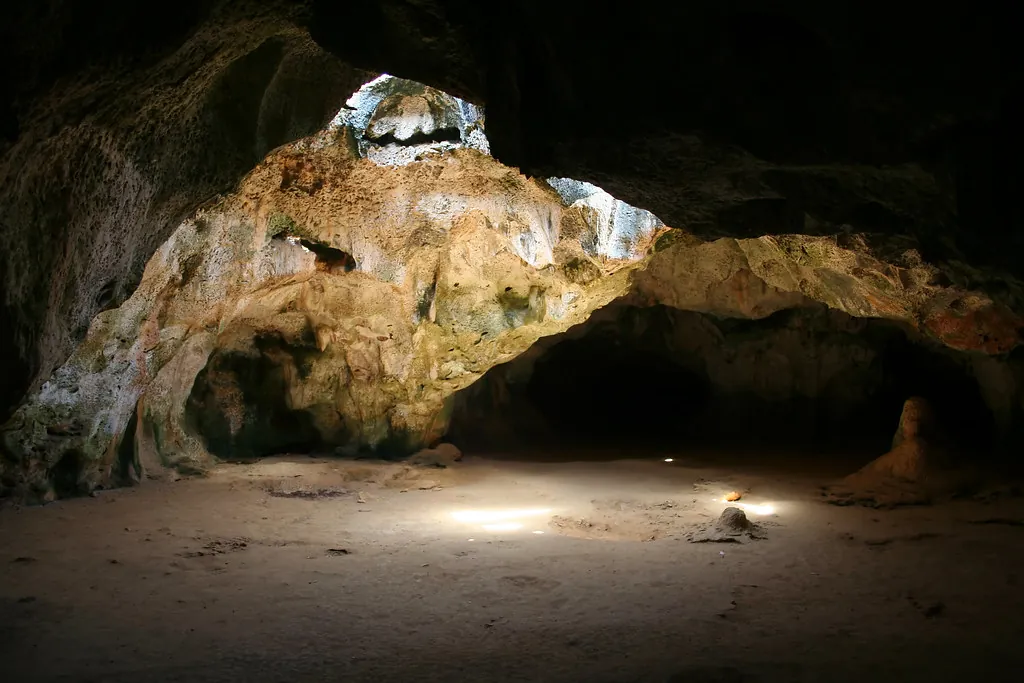
Guadirikiri is photogenic in a slightly awkward way. The strongest natural light comes through openings in the roof, while other sections sink into deep shadow. That contrast can fool phone cameras into making the bright limestone look washed out and the darker chamber look like a black rectangle.
For the sunlit openings, tap the brighter rock on a phone screen before shooting and reduce exposure slightly if the roof light is blowing out. In the darker chamber, hold the phone steady against your body or a permitted stable surface rather than bracing yourself against a formation. A small tripod should only be used where the park permits it and where it does not block the route.
Flash is particularly inappropriate around bats. Even when a flash does not appear dramatic to you, repeated bursts from several visitors can disturb wildlife. Natural light is also what makes the cave photograph interesting in the first place, so work with it.
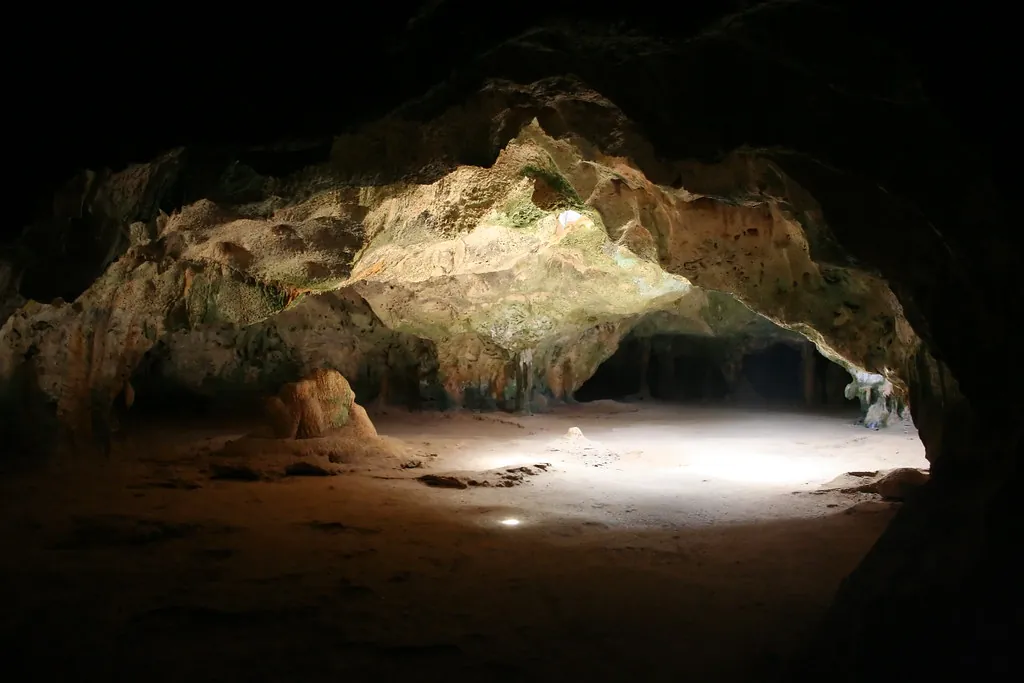
For more chamber-specific composition advice, see the Guadirikiri Cave photos and chambers guide, which covers low-light shooting, the roof openings and the different visual character of the cave’s spaces.
Carry a Light, But Use It Sensibly
A flashlight or phone light is useful in the darker stretches of the cave. It should help you see where your feet are going, not become a searchlight for bats. A narrow beam pointed towards the path gives you enough information without bathing the ceiling in artificial light.
Phone batteries can disappear surprisingly quickly when the camera, screen and torch are all working at once. If photography is important to you, start with a charged phone and consider carrying a small power bank outside the cave. Keep loose equipment secured so nothing drops onto the walkway or gets left behind.
Heat and Hydration Still Matter Underground
The cave feels different from Aruba’s open, sun-baked landscape, but the approach begins in the heat, and your body does not forget that just because you have reached shade. Drink water before entering and carry enough for the wider Arikok outing rather than treating the cave as an excuse to arrive already dehydrated.
A litre of water is a sensible minimum for a broader walk in the park, particularly when you are combining Guadirikiri with other trails or viewpoints. Aruba’s official hiking guidance also recommends at least 1 litre of drinking water for a park hike, along with suitable footwear and sun protection.
- Drink before the walk, rather than waiting until you feel thirsty.
- Carry water in a reusable bottle.
- Wear a hat and use reef-safe sunscreen for the exposed sections.
- Take a break if you feel dizzy, unusually weak or confused.
- Turn back from a trail if heat is affecting your balance or judgement.
If you are already struggling in the sun, do not push on simply because Guadirikiri is the next stop on the itinerary. There will be another day for the cave. Your body is harder to replace than a sightseeing slot.
No Swimming and No Cave-Pool Entry
Guadirikiri Cave is a cave visit, not a swimming attraction. Do not enter a cave pool, water-filled cavity or restricted passage in search of a swim, even if you have seen photographs online that appear to show people in water elsewhere in Aruba.
This distinction matters because several natural-water attractions sit within or around Arikok National Park, and travel content often blends them together. Conchi, Aruba’s Natural Pool, is a separate coastal attraction with its own access conditions and safety considerations. The official Aruba tourism information describes Conchi as a volcanic-rock pool and stresses that conditions around the exposed coastline can change quickly.
Do not improvise an entrance into a cave pool because a route looks accessible. A barrier, closed passage or ranger instruction is the boundary, even when the water looks calm.
The Guadirikiri transport guide explains how cave access fits into an Arikok driving day, while the separate Arikok National Park guide covers the wider collection of caves, trails and natural attractions without mixing their access rules.
Wildlife Rules Apply Even When the Animal Is Small
Wildlife belongs to the park. Do not feed, touch, corner, collect or deliberately approach animals for a photograph. Aruba’s responsible-travel guidance specifically asks visitors to stay on marked trails and observe wildlife from a distance, while discouraging behaviours such as chasing, touching or feeding animals.
The same principle applies to insects and reptiles that may appear inside or around the cave. You do not need to identify every creature before giving it space. Let it carry on with its business.
Never remove shells, rocks, mineral fragments, archaeological material or anything else from the park. A small stone in your pocket is still part of the protected landscape. Leave-no-trace visiting also means resisting the temptation to rearrange rocks for photographs, scratch initials into soft surfaces or leave coins and other objects as souvenirs.
Closures Are Not Suggestions
Guadirikiri Cave can be inaccessible when park authorities close an area, and access conditions can change without matching the information on an older travel page. Closures may relate to weather, maintenance, trail conditions, wildlife protection, safety inspections or other park-management decisions.
Check the current park status before setting off, particularly if Guadirikiri is the main reason you are crossing the island. Aruba’s tourism information currently describes cave access during national-park daytime hours, but current access should be confirmed with the park rather than treated as a permanent promise. Historical park information has listed normal hours of 8:00 a.m. to 4:00 p.m., while government regulations governing park access have been amended over time.
A closed gate is useful information. It tells you the park has decided that conditions, wildlife or maintenance matter more than today’s itinerary. Respect it and choose another part of Aruba.
For current legal and administrative information, consult the Government of Aruba environmental-protection information and the published Arikok National Park access regulation. The Government of Aruba’s official legislation pages are the appropriate place to check legal changes rather than relying on screenshots circulating in travel groups.
What to Do If a Ranger Changes the Plan
Ranger guidance is part of the visitor experience, particularly in a protected area where the condition of trails and wildlife can change. If a ranger asks visitors to wait, move back, keep lights off, use a different route or leave a chamber, follow the instruction promptly.
You do not need to know the reason before complying. Ask politely afterwards if you are curious, and you may get a useful explanation about the cave’s geology, animals or park management. A good ranger can tell you more in five minutes than a dozen hurried photographs can.
Leave the Cave as You Found It
Take every piece of rubbish back out with you, including tissues, food wrappers, drink containers and the tiny bits of packaging that seem too insignificant to matter. They all become part of the site once dropped.
Do not leave flowers, coins, stones, ribbons or personal messages. Do not write names on the walls. Do not stack rocks near the entrance for a photograph. Those gestures can feel harmless in the moment, yet protected landscapes accumulate the marks of thousands of harmless moments.
Aruba’s responsible-tourism guidance frames the same idea across the island: respect land, sea and nature, stay attentive to local rules, and leave only footprints. Inside Guadirikiri, that means your visit should be almost invisible after you have gone.
A Practical Pre-Cave Check
- Water: Carry enough for the cave visit and the rest of your Arikok outing.
- Shoes: Wear closed-toe footwear with reliable grip.
- Light: Carry a small flashlight or keep your phone charged.
- Wildlife: Give bats and other animals space, and never feed or touch them.
- Photography: Keep flash away from bats and never leave the marked route for a photograph.
- Limestone: Do not touch, climb, lean against or sit on formations.
- Water features: Do not swim in restricted cave areas or enter a closed cave pool.
- Rangers: Follow instructions immediately when conditions or access change.
- Rubbish: Carry everything back out with you.
- Park status: Check current access before driving across Aruba for the cave.
Useful Official Sources Before Your Visit
The Aruba Tourism Authority’s Guadirikiri Cave guide is useful for the basic description of the cave and its place within Arikok National Park. Its broader Arikok National Park guide covers the protected landscape and other attractions, while the Aruba sustainability guidance sets out island-wide responsible visitor practices.
For legal and regulatory matters, use the Government of Aruba national ordinances and laws portal and its environmental-protection records. These are more reliable for regulatory changes than an old social-media post, a hotel leaflet printed years ago, or a forum comment from someone who visited before the current rules were in place.
For the wider itinerary, the site’s best time to visit Guadirikiri guide covers heat and daylight conditions, while the Arikok packing and desert-safety guide goes deeper into what to carry across the park. The Aruba cave etiquette guide takes the broader view of responsible cave visiting across the island, so you can carry the same habits with you beyond Guadirikiri.
The Simple Version
Wear shoes that can cope with rock. Bring water and a light. Stay on the marked route. Keep your hands off the limestone. Keep your voice low near bats, and never use flash on them. Do not enter closed passages or cave pools. Take your rubbish with you. When a ranger gives an instruction, follow it.
That is the etiquette that keeps Guadirikiri pleasant for the next visitor and, more importantly, keeps the cave itself in decent condition. The sunlight through those roof openings has been doing its work for a very long time. Your job is simply to let it carry on.